



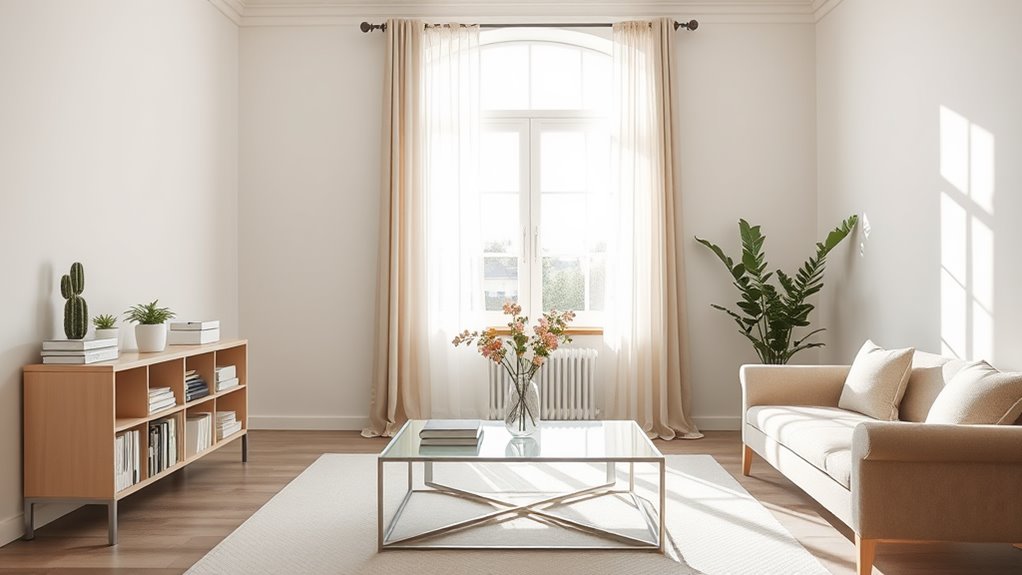
To declutter your home and keep it that way, start by identifying clutter hotspots and creating designated spaces for every item. Develop daily habits, like the one-touch rule, ensuring you put things back in their place right away. Set up regular decluttering sessions to maintain organization, and embrace a minimalist mindset by letting go of items that no longer serve you. These foundational steps can transform your space into a clutter-free haven, and there's more to explore on sustaining this lifestyle.
Breaking the Clutter Cycle
Since clutter tends to creep back in when you're not looking, breaking the clutter cycle requires more than just a one-time cleanup effort. To maintain a clutter-free space, you need to adopt clutter prevention strategies that become a part of your daily routine. Start by implementing sustainable organizing methods, such as assigning a home for each item and establishing habits like putting things back in their place after use. Set reminders to regularly review and purge items that no longer serve a purpose. By doing so, you'll create an environment that nurtures mindfulness and intentionality, making it easier to maintain your space over time. Remember, breaking the clutter cycle is a process that requires commitment, patience, and self-awareness. By making small changes to your daily habits, you'll be well on your way to keeping your home clutter-free and peaceful.
Identifying Clutter Hotspots
Where do you typically drop your belongings when you walk in the door? Is it the entryway table, the couch, or the kitchen counter? Identifying these clutter hotspots is essential to comprehending where clutter tends to accumulate in your home. Take a few minutes to walk through your space and make a mental note of the areas that seem to attract clutter. You can even create a hotspot map to visualize these areas. This clutter identification process will help you pinpoint the spaces that need the most attention. By recognizing these hotspots, you'll be better equipped to develop strategies to manage clutter and keep your home organized. Remember, hotspot mapping is not about judging yourself, but about grasping your habits and creating a more efficient living space that serves you and your loved ones.
Creating a Decluttering Roadmap
Now that you've identified your clutter hotspots, it's time to create a plan of attack. Break down your decluttering project into manageable tasks to maintain momentum and motivation. Start by setting specific, achievable goals for each hotspot, such as "sort through the entire closet" or "clear off the kitchen counter." Then, allocate a realistic timeframe for completing each task, whether it's 30 minutes a day or a few hours on the weekend. Consider enlisting the help of a friend or family member to keep you accountable and make the process more enjoyable. Develop a list of decluttering strategies and organizing techniques you'll use for each task, such as the "one in, one out" rule or categorizing items into keep, donate, and discard piles. With a clear roadmap, you'll be well on your way to a clutter-free home.
Letting Go of Emotional Attachments
What's holding you back from letting go of that old sweater or broken vase? Often, it's the emotional attachment we've formed with these items. We hold onto them since they remind us of a special memory, person, or time in our lives. Nonetheless, keeping cluttered items can prevent us from moving forward and creating space for new experiences.
To overcome emotional attachments, try the following:
- Acknowledge the emotional value: Recognize the memory or feeling attached to the item, and acknowledge its significance.
- Let go of the guilt: Understand that keeping the item doesn't honor the memory or person; it's okay to let it go.
- Find an alternative way to preserve the memory: Take a photo of the item, write down the story behind it, or create a digital archive to preserve the memory without keeping the physical item.
The Power of the One-Touch Rule
As you begin tackling the clutter in your home, you'll likely encounter items that spark debate: should you keep them or let them go? This is where the one-touch rule comes in – a game-changer for decluttering efficiency. When you pick up an item, make a decision about it immediately. Don't put it down and deal with it later; that's just procrastination. By handling each item only once, you'll save time and energy in the long run. One touch benefits include reduced decision fatigue, increased productivity, and a clearer sense of what you really need or want. This rule helps you stay focused and avoid getting bogged down in clutter. So, as you sort through your belongings, remember: one touch, one decision, one step closer to a clutter-free home.
Decluttering Room by Room
Every room in your home holds a unique set of challenges and opportunities regarding decluttering. As you tackle each space, keep in mind that effective room organization relies on customized decluttering techniques. Start by clearing surfaces and sorting items into categories. This will give you a clear view of what you’re working with. Once you have categorized your belongings, decide what to keep, donate, or discard based on necessity and frequency of use. For example, if you need to declutter your dorm room, focus on maximizing limited space by using storage bins and vertical organizers. Maintaining this organized system will make it easier to keep your space tidy in the long run.
Here are three critical steps to help you declutter each room:
- Purge the easy stuff: Get rid of items that are broken, expired, or no longer serve a purpose.
- Categorize and group: Organize items into categories, like "keep," "donate," and "recycle," and group similar items together.
- Assign a home: Once you've purged and categorized, assign a designated spot for each item, ensuring everything has a place to belong.
Strategies for Maintaining a Clutter-Free Space
You've worked hard to declutter your space, and now it's time to maintain it. To keep your home clutter-free, you'll need to set boundaries daily and create maintenance routines that become second nature. By doing so, you'll guarantee that clutter doesn't creep back in and undermine your hard-earned progress.
Set Boundaries Daily
One crucial habit to develop in maintaining a clutter-free space is setting boundaries daily. By doing so, you're creating a conscious effort to control the flow of items entering your home. This helps prevent clutter from building up in the first place.
To set effective boundaries, consider the following:
- Establish daily limits: Decide how much time you're willing to spend on acquiring new items and stick to it.
- Define clutter boundaries: Identify specific areas where clutter tends to accumulate and set rules for what's allowed in those spaces.
- Practice mindful consumption: Be intentional about the items you bring into your home, asking yourself if they truly serve a purpose or bring joy.
Create Maintenance Routines
As you work to maintain your clutter-free space, establishing regular maintenance routines becomes vital to prevent clutter from creeping back in. To achieve this, focus on developing daily habits that promote organization and tidiness. Start by dedicating a specific time each day to maintaining your space, whether it's 10 minutes in the morning or 30 minutes in the evening. During this time, put away items that are out of place, wipe down surfaces, and guarantee everything has a designated spot. Implementing organization systems, such as a "one in, one out" policy or a weekly cleaning schedule, can additionally help you stay on track. By incorporating these habits into your daily routine, you'll be able to maintain your clutter-free space with ease.
Scheduling Regular Decluttering Sessions
You'll need to create a routine to maintain your newly decluttered space, and that starts with setting a decluttering schedule. By choosing a consistent day to tackle clutter, you'll make it a habit and stay on top of messes. Start with small tasks to get yourself started, like dedicating 10 minutes a day or an hour a week to keeping your home organized.
Set a Decluttering Schedule
Two weeks into your decluttering expedition, it's essential to establish a routine to maintain your progress. Set a decluttering schedule to guarantee you stay on track and don't let clutter build up again. This routine will help you create healthy habits and maintain a sense of control over your space.
To make scheduling a breeze, consider the following decluttering tips:
- Identify your most productive times: Schedule decluttering sessions during your most energetic and focused periods of the day.
- Break tasks into smaller chunks: Divide larger tasks into smaller, manageable tasks to avoid feeling overwhelmed.
- Make it a habit: Incorporate decluttering into your daily or weekly routine, so it becomes second nature.
Choose a Consistent Day
Now that you've established a decluttering schedule, it's time to decide on a consistent day for your regular decluttering sessions. This will help you create a habit and make decluttering a part of your weekly rituals. Choose a day that works best for you and stick to it. You can add it to your decluttering calendar to guarantee you don't forget.
| Day of the Week | Benefits |
|---|---|
| Monday | Start the week fresh and organized |
| Wednesday | Break up the week and maintain momentum |
| Friday | End the week organized and prepared for the weekend |
| Sunday | Prepare for the week ahead and relax on Monday |
Start With Small Tasks
One significant key to maintaining your decluttering schedule is to start with small, manageable tasks. This approach allows you to achieve small victories, which motivates you to continue making gradual progress. By focusing on one area or task at a time, you'll avoid feeling overwhelmed and increase your chances of sticking to your schedule.
Here are three small tasks to get you started:
- Clear a single shelf: Take everything off the shelf and sort items into keep, donate, and discard piles.
- Organize your desk drawer: Sort through the contents, throw away trash, and use dividers to keep items tidy.
- Tackle a small clutter zone: Choose a small area, like a corner of your countertop, and declutter it completely.
The Importance of Creating a Home for Everything
As you commence on your decluttering expedition, creating a home for everything becomes crucial since it enables you to maintain order and prevent clutter from building up again. This means assigning designated spaces for each item, making it easy to find what you need when you need it. By doing so, you'll establish a sense of organization that will help you stay on top of clutter. Implementing effective organization systems, such as labeling and categorizing, will likewise help keep your belongings in check. When everything has its own place, you'll be less likely to let clutter accumulate, and maintenance will become a breeze. This approach will likewise help you develop good habits, ensuring that your newly decluttered space remains organized and peaceful.
Embracing a Minimalist Mindset
As you start embracing a minimalist mindset, you'll need to let go of clutter that's holding you back. This means identifying what's truly vital to your daily life and focusing on those items alone. By doing so, you'll create space for what truly adds value and simplicity to your living environment.
Let Go of Clutter
By embracing a minimalist mindset, you'll find it easier to let go of clutter that's been weighing you down. This mindset shift allows you to focus on what truly adds value to your life, rather than holding onto sentimental items out of guilt or obligation. As you begin decluttering, keep in mind that every item you let go of creates space for something new and meaningful.
Here are three decluttering strategies to help you get started:
- Let go of duplicates: If you have multiple items that serve the same purpose, keep only your favorite and let go of the rest.
- Release items that no longer bring joy: Be honest with yourself – if an item no longer sparks happiness or serves a purpose, it's time to let it go.
- Create a "maybe" box: Place items you're unsure about in a box and set a deadline to revisit the item. If you haven't used or thought about it by that time, let it go.
Focus on Essentials
Your minimalist mindset will now guide you to focus on the fundamentals, stripping away the non-crucial items that clutter your space and mind. As you adopt minimalist living, you'll prioritize vital items that bring value and purpose to your life. This means letting go of items that no longer serve you, and being intentional about what you bring into your space.
| Category | Vital Items | Non-Crucial Items |
|---|---|---|
| Clothing | 7-10 outfits for daily wear | Out-of-style clothes, duplicates |
| Kitchen | Cooking essentials (pots, pans, utensils) | Gadgets, infrequently used appliances |
| Decor | Personal, meaningful items (photos, artwork) | Cluttered knick-knacks, unnecessary trinkets |
Frequently Asked Questions
Can I Declutter if I Have Limited Mobility or Disability?
You're not alone in feeling like a ship stuck in the mud, unable to move forward with decluttering because of limited mobility or disability. Fear not! You can still set sail in the direction of a more organized you. Adaptive tools, like reachers or grabbers, can be your trusty anchors, helping you navigate cluttered spaces. Simplified strategies, such as breaking tasks into smaller chunks, will be your guiding light. With these aids, you'll be charting a course in the direction of a more manageable living space in no time.
How Do I Declutter With Family Members Who Resist Change?
When working with resistant family members, you'll need to employ some savvy compromise strategies. Start by calling a family meeting to discuss the benefits of decluttering and listen to their concerns. You'll be more likely to get buy-in if you involve them in the decision-making process. Be open to finding solutions that work for everyone, irrespective of whether it means decluttering at a slower pace or focusing on specific areas. By working together, you can find an approach that respects everyone's needs.
What if I'm Overwhelmed and Don't Know Where to Start?
Wow, you're overwhelmed? What a shock! Don't worry, it's not like you're alone in this feeling. Take a deep breath and remember, you don't have to tackle the entire mess at once. Start small, like, really small. Pick one area, like your desk drawer, and focus on that. Don't let overwhelming emotions get the best of you. Break it down into tiny tasks, and before you know it, you'll be decluttering like a pro!
Can Decluttering Really Improve My Mental and Physical Health?
You're probably wondering if decluttering is really worth the effort. The answer is yes! By letting go of physical clutter, you're creating space for mental clarity. Cluttered environments can contribute to feelings of anxiety and overwhelm, but decluttering can lead to significant stress reduction. As you declutter, you'll start to feel a sense of calm and control, which can have a profound impact on your mental and physical well-being. You'll be amazed at how this simple act can transform your overall health and happiness.
How Long Does It Take to Declutter an Entire House?
You're wondering how long it takes to declutter an entire house? It really depends on the size and complexity of your space, but having a solid plan helps. With focused decluttering strategies, you can tackle smaller areas in a few hours, whereas larger spaces may take days or even weeks. Set realistic time estimates and break it down into manageable chunks. Remember, every bit counts, and the sense of accomplishment will keep you motivated to keep going!