



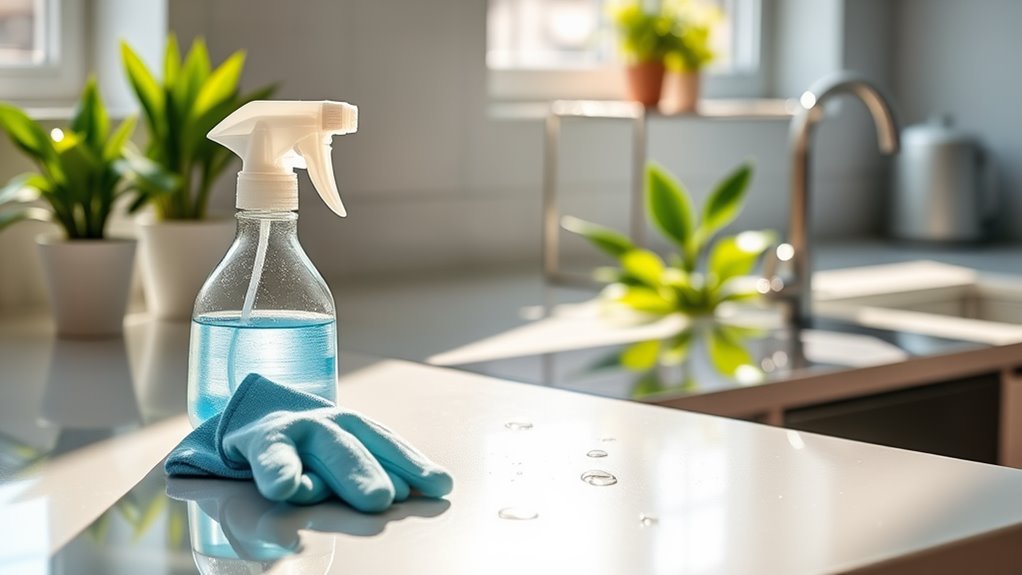
To clean and disinfect high-touch surfaces effectively, start by creating a routine. Use eco-friendly cleaners or disinfectants labeled for viral and bacterial effectiveness. Gather your supplies and remove any debris first. Then, apply the cleaning solution, wipe down surfaces thoroughly, and let them air dry. For disinfection, use EPA-approved products specific for each surface type. By doing this regularly, you help promote a healthier environment. Stick around to explore more tips and techniques for maintaining cleanliness.
Understanding High-Touch Surfaces
When you think about the places that gather the most germs, high-touch surfaces often come to mind. These are the high-touch materials—like doorknobs, light switches, and countertops—that we frequently interact with throughout the day. Comprehending these surfaces is essential for maintaining surface hygiene, especially if you care about the well-being of others.
By identifying high-touch areas in your home or workplace, you can prioritize cleaning efforts effectively. Remember, germs thrive on surfaces that people touch often. Regular attention to these materials not only helps prevent the spread of germs but additionally promotes a healthier environment for everyone.
Being proactive about surface hygiene shows you value the health of those around you. So, take a moment to assess your surroundings, and verify that you’re giving high-touch surfaces the care they need. Your dedication can meaningfully impact the well-being of your community. In addition to being mindful of hygiene, creating a comfortable and inviting space can significantly enhance the collective atmosphere. Whether you’re hosting gatherings or just enjoying a quiet moment, investing time in designing your perfect backyard retreat can foster a sense of tranquility and connection. Remember, a clean and well-cared-for environment not only protects health but also encourages meaningful interactions.
Importance of Regular Cleaning and Disinfection
Cleaning high-touch surfaces regularly isn't just a good habit—it's vital for your health and the health of those around you. By making this a priority, you help guarantee a safer environment for everyone. Regular cleaning and disinfection provide significant health benefits, reducing the spread of germs that can lead to illness. When you take action to keep surfaces clean, you're actively participating in infection prevention.
Think about the common spaces where people gather—kitchens, bathrooms, and shared work areas. These are hotspots for germs, and neglecting them can result in outbreaks that affect your loved ones or colleagues. By committing to a routine of cleaning and disinfection, you're not only protecting yourself but additionally serving your community. It's a simple yet impactful way to show you care. So roll up your sleeves and make a difference with your cleaning efforts!
Recommended Cleaning Products
Choosing the right cleaning products makes a significant difference in your efforts to maintain high-touch surfaces. Opt for eco-friendly cleaners that not only safeguard the environment but also guarantee the safety of those you serve. Many of these products are effective in killing germs while being gentle on surfaces.
When selecting a cleaner, pay attention to disinfectant efficacy. Look for products that specify their effectiveness against common pathogens. This information will guide you in choosing a cleaner that truly works, giving you confidence that you're doing your best to protect others.
Consider multi-surface wipes or sprays that combine cleaning and disinfecting in one step, making your task simpler. Always read labels and follow instructions to maximize the benefits of any cleaning product you choose. By being mindful of your selections, you can create a safer, cleaner environment for everyone.
Step-by-Step Cleaning Process
To effectively clean high-touch surfaces, follow a straightforward step-by-step process that guarantees thoroughness and efficiency. Start by establishing a regular cleaning schedule; consistency is key to maintaining a safe environment for those you serve. Gather your cleaning supplies, ensuring they're suitable for the specific surface materials you'll be addressing.
Begin by removing any loose debris or dust using a microfiber cloth or a vacuum. Next, apply your chosen cleaning solution to the surface. For non-porous materials like metal and plastic, use a damp cloth to wipe down the area, ensuring you cover all corners. For porous materials, like wood, use a gentle cleaner to avoid damage. Rinse the cloth frequently to avoid spreading dirt.
Finally, allow surfaces to air dry completely. This step is essential for ideal cleanliness and preparation for the next disinfection stage.
Disinfection Techniques for Different Surfaces
Once surfaces are cleaned, it's time to focus on disinfection to eliminate germs and viruses. Different surface types require specific disinfection methods to guarantee effectiveness and safety. Here's how you can approach various surfaces:
- Hard surfaces: Use EPA-approved disinfectants or a bleach solution, making sure they stay wet for the recommended contact time.
- Electronics: Wipe down with alcohol-based wipes or sprays that are safe for electronic devices.
- Soft surfaces: Launder items like rugs or upholstery with hot water and detergent, then dry thoroughly.
- Wood: Use a wood-safe disinfectant, avoiding excess moisture that could damage the finish.
- Glass: Clean with a glass cleaner that additionally has disinfecting properties.
Tips for Maintaining Cleanliness
Even though it might seem challenging to keep your home consistently clean, establishing a routine can make a significant difference. Start by creating cleaning schedules that fit your lifestyle—daily, weekly, or monthly tasks can help you stay on track. Focus on high-touch surfaces like doorknobs, light switches, and countertops, prioritizing them in your routine.
When cleaning, pay attention to the specific surface materials in your home. Different materials require different cleaning agents; for instance, wood surfaces may need a gentle cleaner, whereas stainless steel can handle stronger disinfectants.
Motivate family members to pitch in, making cleanliness a shared responsibility. You'll cultivate a sense of teamwork and guarantee everyone feels invested in maintaining a tidy space. Remember, consistency is key. By sticking to your cleaning schedule and adapting to the surface materials, you'll create a welcoming environment for both your family and guests.
Additional Resources for Safe Cleaning Practices
In relation to cleaning high-touch surfaces, knowing the right products and techniques is key. You'll want to explore recommended cleaning solutions that effectively eliminate germs without harming your surfaces. Moreover, comprehending safe disinfecting methods can help protect both your health and the environment.
Recommended Cleaning Products
Selecting the right cleaning products is crucial for effectively sanitizing high-touch surfaces and guaranteeing safety. You want to choose options that not only clean well but additionally protect both your health and the environment. Here are some recommended products:
- Eco-friendly cleaners: Look for biodegradable formulas that minimize environmental impact.
- Commercial disinfectants: Verify they're EPA-approved for effectiveness against viruses and bacteria.
- Multi-surface sprays: Versatile options that can clean various materials safely.
- Alcohol-based wipes: Convenient for quick sanitation on-the-go.
- Microfiber cloths: Ideal for trapping dirt and germs without harsh chemicals.
Safe Disinfecting Techniques
Safe disinfecting techniques are vital for maintaining a healthy environment, especially on high-touch surfaces. When you clean, consider using natural disinfectants like vinegar or hydrogen peroxide, which effectively kill germs without harmful chemicals. These eco-friendly cleaners not only protect your health but additionally safeguard the planet.
Always confirm that the surface is clean before applying any disinfectant; this improves effectiveness. Remember to follow the manufacturer's instructions on contact time, allowing the disinfectant to sit long enough to work its magic. Use gloves for protection and guarantee proper ventilation during cleaning. Finally, educate those around you about these safe practices, cultivating a culture of care and responsibility in your community. Together, you can create a cleaner, healthier space for everyone.
Frequently Asked Questions
How Often Should High-Touch Surfaces Be Cleaned and Disinfected?
In the spirit of maintaining a welcoming environment, you'll want to embrace a daily schedule for cleaning and disinfecting high-touch surfaces. This thoughtful approach not only improves hygiene but additionally promotes a sense of care for those you serve. Ideally, you should aim for a cleaning frequency that aligns with your daily activities, ensuring that surfaces remain pristine and inviting. Regular attention to these areas reflects your commitment to health and comfort for everyone involved.
Can I Use Homemade Cleaning Solutions for Disinfection?
Yes, you can use homemade cleaning solutions for disinfection. Many effective ingredients, like vinegar, baking soda, and vital oils, can help you create a strong mix. Nevertheless, be mindful of the surfaces you're cleaning; some materials might react negatively. When you make your own solutions, it's important to verify they're safe and effective. Always test a small area first, so you can serve others safely during the process of keeping your environment clean and healthy.
What Are the Signs of Effective Disinfection?
Disinfection's like a dance; you need the right steps to get it right. To identify effectiveness indicators, look for surfaces that feel clean and free from residue. Disinfection methods should leave no lingering odors or streaks, signaling that pathogens are gone. If you can see and feel the difference, it's a good sign. Remember, maintaining a safe environment shows you care for those around you, making your efforts even more rewarding.
Are There Specific Products for Electronics and Touchscreens?
Yes, there are specific products designed for electronics and touchscreens. You'll want to use safe cleaning solutions that won't damage the surfaces or screens. Look for microfiber cloths and alcohol-based wipes that are labeled as safe for electronic care. These products guarantee you clean effectively without compromising the functionality of the devices. Always check manufacturer guidelines to keep your electronics in top shape as you serve others by maintaining a safe environment.
What Precautions Should I Take While Cleaning?
When you're preparing for a big game, you don't just grab your gear and run onto the field—you suit up for safety. Similarly, during cleaning, always wear protective gear like gloves and masks. Make certain you store cleaning products safely, away from children or pets. Taking these precautions helps guarantee both your safety and the well-being of those around you, allowing you to serve others more effectively.