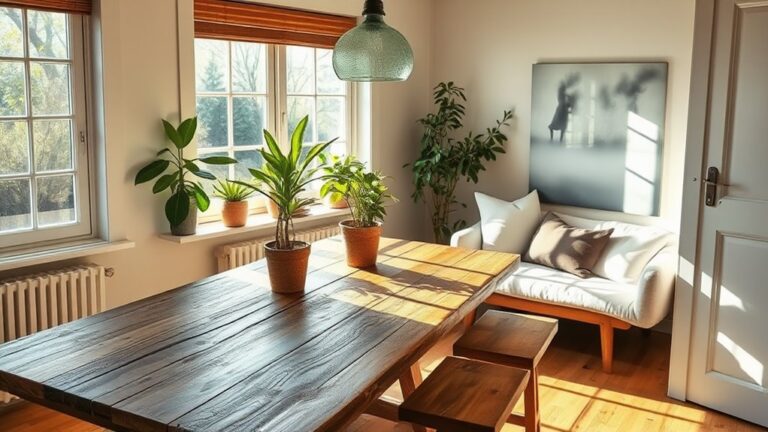


To design a functional and stylish home office, start by envisioning your ideal workspace style – sleek and modern or cozy and eclectic. Identify your must-haves, like ergonomic furniture and task lighting, and choose a color scheme that boosts your mood and energy. Next, select multi-functional furniture pieces and add decorative accents that reflect your personality. Finally, organize your workspace into task zones and maintain a tidy space through regular routines. By following these steps, you’ll create a space that fuels your creativity and productivity – and discover even more secrets to revealing your dream home office. Additionally, incorporating elements like plants, artwork, or inspiring quotes can make your home office feel more inviting and personalized. Just as you might explore dream bedroom makeover ideas to create a relaxing and stylish retreat, applying similar design principles to your workspace can enhance both comfort and efficiency. With thoughtful planning and creative touches, your home office can become a space where productivity and inspiration thrive.
Defining Your Home Office Style
What kind of space do you envision when you think of your dream home office? Do you picture a sleek, modern oasis or a cozy, eclectic retreat? Defining your home office style is vital to creating a space that inspires productivity and creativity. Consider a minimalist design, characterized by clean lines, monochromatic color schemes, and a focus on functionality. This aesthetic is perfect for those who value simplicity and ease of use. Conversely, you may prefer an eclectic decor that showcases your personality through bold colors, unique textures, and statement pieces. This style is ideal for creatives who thrive in a stimulating environment. Whatever your style, it's important to identify it early on to guarantee your home office reflects your needs and personality.
Assessing Your Workspace Needs
Now that you've pinpointed your ideal home office style, it's time to get down to business and evaluate the functional aspects of your workspace. You need to assess your workspace requirements, taking into account the tasks you'll be performing and the equipment you'll need. Consider the type of work you'll be doing, how much time you'll spend at your desk, and the number of people who'll be using the space. Ergonomic considerations are likewise essential, as you want to guarantee your workspace promotes comfort and reduces the risk of injury. Think about the height and type of chair you'll need, the placement of your monitor and keyboard, and the amount of natural light you'll require. By carefully evaluating these factors, you'll be able to create a functional and efficient workspace that meets your unique needs.
Choosing the Right Color Scheme
How will you set the tone for your home office with a color scheme that inspires productivity and creativity? The right colors can boost your mood, energy, and focus, making it easier to tackle tasks and stay motivated. Consider the principles of color psychology to select a palette that improves your mood and work style. Cool tones like blues and greens can promote calmness and clarity, whereas warm tones like oranges and yellows can stimulate creativity and enthusiasm. Neutral shades like whites, grays, and beiges can provide a clean and organized backdrop for your workspace. By choosing a color scheme that resonates with you, you'll create an environment that not just looks great but also supports your well-being and productivity. Remember, the right colors can enhance your work experience, so don't be afraid to experiment and find the perfect hue for your home office.
Selecting Essential Furniture Pieces
With your color scheme in place, you're ready to bring your home office to life with the right furniture. When selecting crucial pieces, prioritize functionality and style. Invest in an ergonomic chair that provides ideal support and comfort for long work hours. Next, consider a multi-functional desk that accommodates your workflow and technology needs.
Here are three must-haves for a functional and stylish home office:
- Ergonomic seating: A good chair can boost productivity and reduce eye strain.
- Multi-functional desk: A desk with built-in storage and cable management keeps your workspace organized.
- Ample shelving: Additional storage for books, files, and office supplies keeps your workspace clutter-free.
Adding Decorative Accents
You've got the fundamentals in place, now it's time to add some personality to your home office. A simple way to start is by adding a rug, which can instantly add warmth and coziness to the space. Next, consider incorporating artwork that inspires you, as it can boost your productivity and creativity.
Rugs Add Warmth Instantly
- Texture contrast: Combine smooth surfaces like wood or glass with a plush rug to create visual interest.
- Color coordination: Choose a rug that complements your office's color scheme to create a sense of harmony.
- Scale: Select a rug that's proportional to your furniture to avoid overwhelming the space.
Artwork Boosts Productivity
About three out of four employees report that artwork in their workspace inspires creativity and boosts productivity. As you design your home office, consider incorporating artwork types that resonate with your personal style and work goals. Abstract art, nature-inspired prints, or motivational quotes can create a stimulating environment. Hang a statement piece above your desk or place a few thought-provoking prints around the room to spark creativity. The productivity benefits are undeniable – artwork can reduce stress, improve focus, and even increase job satisfaction. By thoughtfully selecting artwork that speaks to you, you'll create a space that not only looks great but likewise helps you stay motivated and engaged.
Incorporating Task Lighting
When designing your home office, you'll want to think strategically about task lighting. You'll need to decide where to place desk lamps to minimize glare and maximize visibility, and strike a balance between task lighting and ambient light to create a comfortable work environment. Furthermore, consider incorporating LED strips under shelves or in corners to add subtle, modern accents that can likewise help illuminate your workspace.
Desk Lamp Placement
As you set up your home office, proper desk lamp placement can make all the difference in creating an efficient and comfortable workspace. It is crucial to position your lamp to minimize glare, reduce eye strain, and optimize light distribution. Consider the following tips for ideal desk lamp placement:
- Adjust the lamp height: Position the lamp so the light source is slightly above eye level to reduce glare on your screen.
- Optimize light intensity: Choose a lamp with adjustable light intensity to customize the brightness to your needs.
- Angle the light correctly: Direct the light toward the task at hand, such as your keyboard or papers, to reduce shadows and improve visibility.
Ambient Light Balance
By incorporating task lighting into your home office design, you can achieve a perfect ambient light balance that boosts your productivity and comfort. When done correctly, task lighting complements natural light, creating a harmonious blend of lighting layers. This balance is key to reducing eye strain and improving focus. To achieve this, start by evaluating your space's natural light availability. Then, add task lighting to areas where you'll be working, such as under-cabinet lighting or a desk lamp. Finally, consider adding ambient lighting to fill in any gaps. By layering your lighting, you'll create a space that's both functional and visually appealing.
LED Strip Options
Several LED strip options are available to help you achieve ideal task lighting in your home office. You can choose from a variety of LED color options, including cool white, warm white, and RGB, to create a personalized ambiance. To further customize your task lighting, consider LED strips with brightness control, allowing you to adjust the light intensity to suit your needs.
Here are three benefits of incorporating LED strips into your home office design:
- Flexibility: LED strips can be easily installed under shelves, around desks, or along walls to provide targeted task lighting.
- Energy Efficiency: LED strips are an eco-friendly option, using considerably less energy than traditional light sources.
- Aesthetics: LED strips can add a modern, sleek touch to your home office, making it a stylish and functional space.
Organizing Your Workspace
When designing your home office, you'll quickly realize that a clutter-free workspace is essential for productivity and focus. To achieve this, you'll need to implement effective workspace decluttering techniques. Start by sorting items into categories, such as "keep," "donate," and "recycle." Be ruthless – get rid of anything you don't need or use. Next, invest in efficient storage solutions, like shelves, drawers, and file cabinets. Label each storage unit so you can easily find what you need. Consider a desk organizer or tray to keep frequently used items within reach. Finally, establish a routine to maintain your newly organized workspace. Set aside time each week to tidy up and keep your space clutter-free. By following these steps, you'll create a workspace that's both functional and stylish.
Creating a Functional Layout
One of the most critical aspects of designing a home office is creating a functional layout that improves your productivity and comfort. A well-planned layout helps you stay focused and efficient, which is vital for achieving your goals. To create a functional layout, consider the following key factors:
- Workspace flow: Think about how you'll move around your workspace and arrange your furniture to minimize distractions and maximize efficiency.
- Furniture arrangement: Position your furniture in a way that creates a comfortable and ergonomic workspace. Make sure your chair, desk, and computer are at comfortable heights and distances.
- Task zones: Divide your workspace into task zones, such as a desk area for focused work, a reading nook for research, and a storage area for supplies. This will help you stay organized and avoid clutter. By considering these factors, you can create a functional layout that helps you stay productive and comfortable.
Adding Personal Touches
Now that you've created a functional layout, it's time to infuse your home office with personality by adding personal touches. This is where you get to express your individuality and make the space truly yours.
| Personal Touch | Description |
|---|---|
| Family Photos | Hang framed photos of loved ones to create a sense of warmth and comfort. |
| Artwork | Display personalized decor that reflects your style, such as paintings or prints. |
| Memorabilia | Showcase meaningful mementos, like awards or collectibles, that inspire motivation. |
| Rugs | Add a lively area rug that complements your office's color scheme and adds texture. |
| Plants | Bring in some greenery to purify the air and boost productivity. |
Frequently Asked Questions
Can I Use a Murphy Desk in a Small Home Office?
As you ponder the wisdom of ancient Greek philosopher, Aristotle, "We are what we repeatedly do," consider how a Murphy desk can transform your workstyle. In a small space, a Murphy desk is a clever solution, providing benefits like maximizing floor space and minimizing clutter. By folding up when not in use, it creates a seamless shift between work and personal life. You'll appreciate the extra room for creative pursuits or relaxation, making your compact office a haven of productivity and innovation.
How Do I Minimize Distractions in an Open-Plan Office?
You're working in an open-plan office, and distractions are killing your focus. To minimize them, you'll need some strategic solutions. Start by investing in noise-canceling headphones to block out background chatter. Next, develop productivity techniques like the Pomodoro Technique, which involves working in focused 25-minute increments, followed by a 5-minute break. By combining these tools, you'll create a distraction-free zone, even in the midst of a lively office.
What Is the Ideal Temperature for a Home Office?
You're probably wondering what the ideal temperature is for your workspace. The answer lies in finding the sweet spot for temperature regulation. Aim for a range between 68-72°F (20-22°C) to maintain peak comfort levels. This temperature zone promotes focus, productivity, and reduces fatigue. By keeping your workspace at this temperature, you'll be able to stay engaged and motivated, ultimately resulting in better performance and a more enjoyable work experience.
Can I Use a Home Office for Non-Work Purposes Too?
You're not alone in wanting a space that's more than just a workstation! Did you know that 64% of Americans pursue creative hobbies in their free time? You can definitely use your home office for non-work purposes too! Turn it into a multi-purpose space that fuels your passions. Whether it's painting, writing, or photography, your home office can be a hub for creative expression. So, go ahead and set up that easel or writing desk – your creative side will thank you!
How Often Should I Declutter My Home Office?
You'll want to establish a decluttering schedule to maintain your workspace organization. Aim to declutter your home office every 1-2 weeks, depending on how frequently you use it. Set aside 30 minutes to an hour to sort through papers, files, and supplies. Be ruthless – get rid of anything unnecessary or outdated. This habit will help you stay focused, productive, and inspired in your workspace. By staying on top of clutter, you'll create a space that sparks creativity and efficiency.