


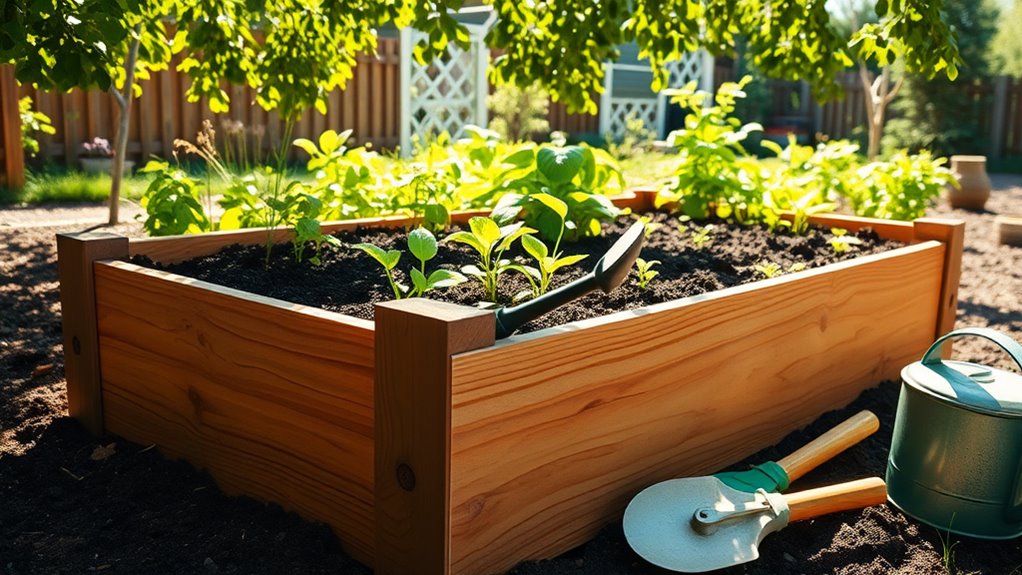
To build a raised garden bed, start by choosing a sunny spot with good drainage. Select durable materials like cedar or pressure-treated lumber and determine the size—around 4 feet long and 3 feet wide works well. Prepare the ground by removing weeds and leveling the soil. Fill the bed with a nutrient-rich mix of compost and topsoil. Finally, pick plants suited for your climate, and discover tips to maintain your flourishing garden as you go along.
Choosing the Right Location for Your Raised Garden Bed
When selecting the perfect spot for your raised garden bed, what should you consider? First off, think about sunlight exposure. Most vegetables and herbs thrive with at least six hours of direct sunlight daily. So, scout your yard and identify areas that bask in the sun, avoiding spots that are shaded by trees or buildings.
Next, tackle drainage considerations. A well-drained site prevents water from pooling around your plants' roots, which can lead to rot. Look for slightly raised areas or spots with sandy soil, as these promote better drainage. If your yard has heavy clay soil, you might want to lift your beds further to guarantee ideal drainage.
Selecting Materials for Construction
After you've found the ideal site for your raised garden bed, it's time to choose the right materials for construction. The wood types you select can make a significant difference in durability and aesthetics. Cedar and redwood are popular choices because of their natural resistance to rot, but they can be pricier. If you're looking for something more cost-effective, pressure-treated lumber is an option, though it may contain chemicals you want to avoid in your garden.
Consider the thickness of the wood as well; thicker boards tend to last longer and withstand the elements better. Don't forget about drainage! Using garden fabric at the bottom can prevent soil loss while allowing water to escape. In the end, weigh your cost considerations against the longevity and environmental impact of your choices. By selecting the right materials, you'll guarantee your garden bed flourishes for years to come.
Determining the Size and Shape
When determining the size and shape of your raised garden bed, think about the ideal dimensions for your plants and your available space. Consider how much room you have and how you want the bed to fit into your surroundings. This will help you create a design that's both functional and visually appealing.
Ideal Dimensions for Beds
Choosing the right dimensions for your raised garden bed is crucial for maximizing productivity and ensuring ease of maintenance. The ideal bed height typically ranges from 12 to 24 inches, allowing for root growth as well as minimizing strain on your back. For bed width, aim for 3 to 4 feet, ensuring you can easily reach the center without stepping on the soil.
Here's a quick reference table for your ideal dimensions:
| Dimension Type | Recommended Size | Purpose |
|---|---|---|
| Bed Height | 12-24 inches | Root growth & accessibility |
| Bed Width | 3-4 feet | Easy access & maintenance |
| Bed Length | 4-8 feet | Space for various plants |
Shape Considerations for Design
How do you envision the shape of your raised garden bed? Think beyond traditional square beds. Embracing innovation, you might consider beds with curved edges that can create a more dynamic and inviting garden space. Curved designs not just soften the look of your yard, but they can additionally improve accessibility, allowing you to reach every corner with ease. If you prefer a structured aesthetic, square beds can work wonders, providing a classic and organized feel. Experiment with various sizes and shapes; perhaps a series of smaller square beds arranged in a pattern or a large, sweeping curve that draws the eye. Whatever you choose, let your garden bed shape reflect your unique style and gardening dreams.
Space Availability Assessment
Evaluating the available space in your yard is essential for determining the size and shape of your raised garden bed. You'll want to maximize your garden space as you make certain your plants thrive. Here are three key considerations:
- Dimensions: Measure your area to decide on a length and width that fits without overcrowding.
- Sunlight Exposure: Confirm your chosen location receives at least six hours of sunlight daily for ideal growth.
- Accessibility: Plan pathways around your garden bed for easy access to tend and harvest.
Gathering Essential Tools
To build a raised garden bed successfully, you'll need a few vital tools that make the job easier and more efficient. Start with basic tool types like a shovel and a rake, which are fundamental equipment for preparing your soil and leveling the bed. A drill is a game-changer for securing boards together, as you measure tape guarantees accurate dimensions for your design. Don't forget a level to keep your raised bed even and stable.
If you're feeling innovative, consider using a saw for custom cuts, allowing you to personalize your bed's shape. A pair of gardening gloves will protect your hands during the process. Finally, a wheelbarrow can help you transport materials with ease. With these tools in hand, you're primed for success, setting the stage for a flourishing garden that showcases your green thumb.
Preparing the Ground
Preparing the ground is a vital step in building a raised garden bed that thrives. By guaranteeing proper soil preparation and ground leveling, you set the stage for lively plant growth. Here's how to get started:
- Choose the Right Location: Pick a spot that gets at least 6-8 hours of sunlight daily. This guarantees your plants get the energy they need to flourish.
- Clear the Area: Remove any grass, weeds, or debris. This helps prevent competition for nutrients and makes soil preparation easier.
- Level the Ground: Use a rake to even out the surface. A flat base is fundamental for stability and helps maintain consistent moisture levels in your raised bed.
Building the Frame
With the ground prepped and ready, you can now focus on building the frame for your raised garden bed. Start by selecting sturdy frame materials that suit your style and budget. Cedar, redwood, or composite lumber are great options, providing durability and a natural look. For a modern twist, consider using metal or reclaimed materials that make a statement.
Once you've chosen your materials, think about the frame finishes. A natural wood sealer can improve the longevity of wooden frames, whereas a sleek paint or powder coating can raise metal designs. Don't forget to measure and cut your materials for a snug fit, ensuring your bed is both functional and visually appealing.
This is your opportunity to innovate, creating a unique garden space that reflects your personal flair as well as supporting healthy plant growth. Let your creativity shine as you craft the perfect foundation for your garden!
Securing the Corners
Securing the corners of your raised garden bed is crucial for stability and longevity. By focusing on strong corner connections and effective corner reinforcements, you'll guarantee your bed can withstand the test of time and weather. Here are three innovative methods to secure those corners:
- Corner Brackets: Use metal corner brackets to provide robust support, keeping your frame square and stable.
- Wooden Dowels: Drill holes and insert wooden dowels at each corner for a seamless, sturdy connection that blends with the natural aesthetics of your garden.
- Reinforced Screws: Invest in heavy-duty screws designed for outdoor use, making certain your corners remain tight and secure through shifting soil and moisture.
Adding a Bottom Layer for Drainage
To guarantee your raised garden bed has proper drainage, adding a bottom layer is essential. This layer not just helps excess water escape but likewise promotes moisture retention for your plants. You can get creative with various drainage materials that suit your needs.
Here's a simple way to visualize your options:
| Drainage Material | Benefit |
|---|---|
| Gravel | Improves drainage |
| Ground cover fabric | Prevents soil loss |
| Wood chips | Boosts moisture retention |
Filling Your Raised Bed With Soil
Filling your raised garden bed with soil is a crucial step that sets the foundation for healthy plant growth. To achieve the perfect soil composition, consider these innovative filling techniques:
- Layering: Create a mix of materials. Start with a base of cardboard or newspaper to suppress weeds, then add a combination of compost, topsoil, and peat moss.
- Square Foot Method: Use precise measurements for your soil mix, ensuring equal parts of compost, vermiculite, and peat moss, which promotes excellent drainage and nutrient retention.
- Soil Testing: Before filling, test your soil to determine pH and nutrient levels, allowing you to amend with organic fertilizers customized for your garden's needs.
Choosing the Right Plants for Your Garden
After you've set up your raised bed with the right soil, the next step is selecting the plants that will thrive in your garden. To maximize your yield and create a lush environment, consider incorporating companion planting. This innovative approach involves pairing plants that benefit each other, like tomatoes with basil or carrots with onions. These combinations not merely improve growth but likewise deter pests naturally.
Next, think about seasonal vegetables that suit your climate. Fast-growing options like radishes and leafy greens can provide quick rewards, whereas longer-maturing crops like squash and peppers can be planted for a bountiful harvest later on.
Experiment with colors, textures, and flavors to create a visually stunning and productive garden. Remember, diversity is key; mixing various plants encourages a healthier ecosystem. By carefully choosing the right plants, you'll boost your green thumb game and enjoy a thriving garden all season long.
Watering and Maintenance Tips
As your plants are acclimating to their new home, consistent watering and maintenance are essential for their success. To guarantee your garden thrives, consider these innovative tips:
- Implement Drip Irrigation: This efficient system delivers water directly to the roots, reducing waste and promoting healthy growth. It saves you time and conserves water.
- Use Mulching Techniques: Apply organic mulch around your plants to retain soil moisture, suppress weeds, and regulate temperature. This simple step can greatly improve your garden's health.
- Monitor Soil Moisture: Regularly check the moisture level of your soil. Use a moisture meter for precision, confirming you're not over or under-watering.
Enhancing Your Garden With Decorative Elements
Once your plants are thriving with proper watering and maintenance, it's time to think about how you can improve your garden's visual appeal. Start by incorporating unique garden art that reflects your personality; sculptures or colorful mosaics can add a creative touch. Decorative fencing not only defines your space but can likewise serve as a stunning backdrop for climbing plants. Consider using themed decor, like rustic or modern elements, to create a cohesive look that draws the eye.
Don't forget about plant markers—these can be both functional and artistic. Opt for handmade markers made from reclaimed materials for an eco-friendly twist.
Frequently Asked Questions
How Long Will My Raised Garden Bed Last?
Your raised garden bed's lifetime expectations largely depend on the materials you choose. If you use rot-resistant woods like cedar or composite materials, you can enjoy a durable structure for 10 to 20 years. Nevertheless, untreated wood might merely last 3 to 7 years. To maximize material durability, consider applying non-toxic sealants or liners. Investing in quality materials not just improves longevity but additionally supports your innovative gardening efforts for years to come.
Can I Build a Raised Bed on Concrete?
They say, "Where there's a will, there's a way," and you can definitely build a raised bed on concrete! Choose the right raised bed materials, like rot-resistant wood or composite boards. Don't forget about drainage solutions; it's essential to guarantee your plants thrive. Incorporate a layer of gravel at the bottom or use raised designs to promote air circulation. With a little creativity, you can turn that concrete space into a lively garden oasis!
What Pests Should I Watch for in My Raised Bed?
When you set up your raised bed, keep an eye out for common pests like aphids, slugs, and spider mites. Implementing effective pest control strategies is essential. You can attract beneficial insects like ladybugs and lacewings to your garden; they'll help keep those pests in check naturally. Consider using companion planting as an innovative approach to deter unwanted visitors during the promotion of a healthy ecosystem in your raised bed.
How Do I Deal With Weeds in My Raised Garden Bed?
Picture yourself in a medieval garden, battling pesky weeds! To deal with weeds in your raised garden bed, start with effective weed prevention strategies. Apply organic mulch, like straw or wood chips, around your plants. This not only suppresses weeds but likewise retains moisture. Regularly check for any unwanted growth and pull them out by hand when they're small. With these proactive steps, you'll keep your garden thriving and weed-free!
Can I Grow Vegetables in a Shaded Area?
Yes, you can definitely grow vegetables in a shaded area! Focus on shade-tolerant options like leafy greens, such as spinach and lettuce, or root vegetables like carrots and radishes. These plants thrive in lower light conditions and still produce delicious yields. When selecting your vegetables, keep their shade tolerance in mind to guarantee a successful harvest. Don't underestimate the potential of your shaded garden space; it can be a thriving green oasis!