



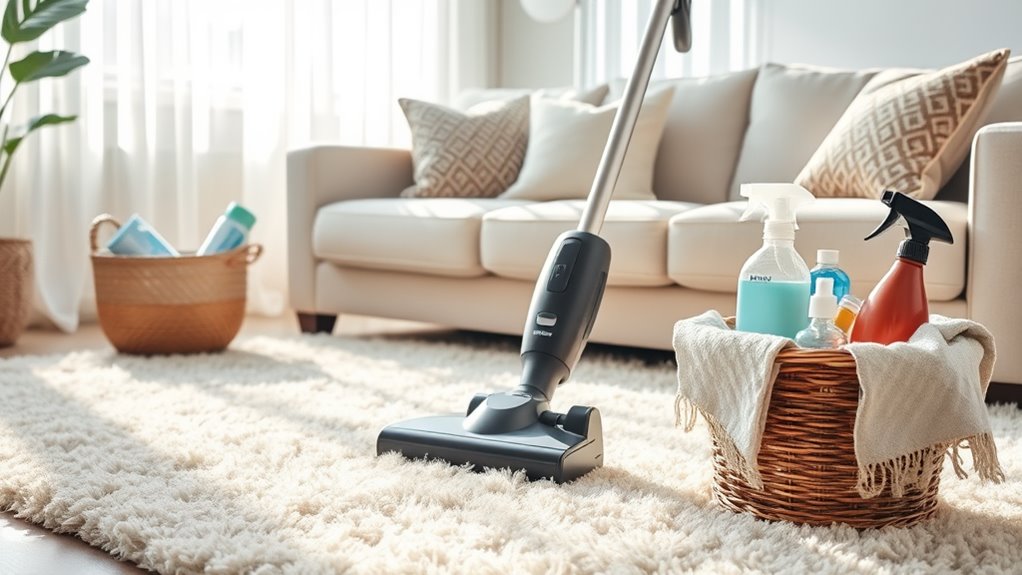
To remove pet hair and odors from your home, regularly vacuum high-traffic areas and use tools like rubber brooms and lint rollers to catch stray hairs. Brush your pets often to minimize shedding, and choose pet-safe cleaners to combat smells. Incorporate natural deodorizing methods, like baking soda and vinegar, for added freshness. Establish a consistent cleaning routine to stay on top of hair and odors. There's more effective strategies ahead to improve your home's cleanliness.
Understanding the Sources of Pet Hair and Odors
When you bring a pet into your home, you're not merely inviting companionship; you're similarly welcoming the inevitable shedding of fur and unique odors that come with them. Comprehending the sources of pet hair and odors is key to managing them effectively. Different pets exhibit varying hair shedding patterns based on their breed, age, and health. For instance, some dogs and cats tend to shed more during seasonal changes owing to their natural pet behavior, whereas others may have a more consistent shedding cycle.
Moreover, odors often arise from your pet's skin oils, saliva, and urine. Regular grooming can help minimize shedding and reduce odors, as it removes loose hair and dirt. By being proactive and attentive to your pet's needs, you'll not only maintain a cleaner home but likewise create a more comfortable environment for both you and your furry friend.
Effective Vacuuming Techniques for Pet Hair
To effectively tackle pet hair in your home, perfecting vacuuming techniques is essential. You want to guarantee your space feels welcoming for both guests and furry friends. Here are three effective vacuuming techniques to help you manage pet hair:
- Use a vacuum with strong suction: Opt for one particularly designed for pet hair. The right model will make a noticeable difference.
- Vacuum regularly: Set a schedule to vacuum at least once a week. Frequent cleaning prevents hair buildup and makes your job easier.
- Focus on high-traffic areas: Pay extra attention to places where your pets spend the most time, like living rooms and bedrooms, to keep hair under control.
Choosing the Right Cleaning Tools and Products
After perfecting effective vacuuming techniques, the next step in your battle against pet hair and odors is selecting the right cleaning tools and products. You'll want to invest in specialized cleaning tools like rubber brooms or lint rollers, which can easily lift stubborn pet hair from various surfaces. Microfiber cloths are likewise fantastic for capturing dust and allergens, making your home a healthier space for your loved ones.
When it comes to odors, choose pet safe products that won't harm your furry friends or the environment. Look for enzymatic cleaners that break down waste and eliminate odors at the source. Avoid harsh chemicals, as they can irritate your pets. Instead, opt for natural solutions like baking soda or vinegar, known for their odor-neutralizing properties. By carefully selecting your cleaning tools and pet safe products, you'll create a welcoming environment for everyone in your home.
Regular Grooming and Maintenance for Your Pets
Regular grooming and maintenance keep your pets looking their best and greatly reduce shedding and odors in your home. By implementing effective grooming techniques, you not merely improve your pet's hygiene but additionally create a more pleasant living environment for everyone. Here are three crucial grooming practices you should adopt:
- Brushing: Regularly brush your pet's coat to remove loose hair and prevent matting. This also stimulates skin oils that promote a healthy coat.
- Bathing: Bathe your pets using appropriate shampoos to eliminate odors and dirt. Aim for a routine that suits your pet's coat type.
- Nail Trimming: Keep your pet's nails trimmed to prevent scratches on surfaces and guarantee their comfort.
Deodorizing Your Home: Natural and Chemical Solutions
When it pertains to keeping your home fresh, you've got options with both natural and chemical solutions. Natural methods like baking soda and crucial oils can work wonders, whereas chemical odor eliminators offer strong results. Let's explore how each approach can help you tackle those persistent pet odors effectively.
Natural Deodorizing Methods
Whilst tackling pet odors, you might prefer natural methods that are safe for both your home and furry friends. Here are three effective ways to naturally deodorize your space:
- Baking Soda: Sprinkle baking soda on carpets and upholstery, let it sit for a few hours, then vacuum it up. It absorbs odors and leaves your home smelling fresh.
- Vital Oils: Mix a few drops of vital oils like lavender or lemon with water in a spray bottle. Lightly mist your fabrics and air to infuse a pleasant scent.
- White Vinegar: Place a bowl of white vinegar in rooms with strong odors. It'll neutralize smells without leaving a strong scent behind.
These methods not only refresh your home but additionally keep it safe for your pets.
Chemical Odor Eliminators
If you're looking for quick and potent solutions to combat pet odors, chemical odor eliminators can be highly effective. These products work by neutralizing odors rather than simply masking them, providing immediate relief. When choosing a chemical fragrance alternative, consider your home environment and the safety of your loved ones. Many brands offer eco-friendly options that don't compromise on performance. Look for formulas that break down odors at the molecular level for lasting freshness. Before applying any product, test it on a small area to ascertain it won't damage surfaces. Remember, during chemical solutions can be beneficial, combining them with natural methods can create a thorough approach to a fresh and inviting home for everyone.
Creating a Pet-Friendly Cleaning Routine
Creating a pet-friendly cleaning routine keeps your home fresh and inviting. You'll want to focus on daily cleaning necessities, tackle weekly deep cleaning tasks, and explore natural odor eliminators that are safe for your furry friends. Let's break down how to make cleaning easy and effective for both you and your pets.
Daily Cleaning Essentials
Regularly incorporating a few simple cleaning tasks into your daily routine can make a world of difference in managing pet hair and odors. By following these daily cleaning tips, you can create a pet-friendly environment that benefits both you and your furry friends.
- Sweep or vacuum high-traffic areas: Focus on spots where your pets spend most of their time to quickly pick up loose hair.
- Wipe down surfaces: Use a damp cloth to remove hair and dander from furniture and counters.
- Wash pet bedding: Frequent laundering of your pet's bedding helps eliminate odors and allergens.
Keep crucial supplies like lint rollers, microfiber cloths, and pet-safe cleaners handy. With these simple tasks, you'll create a cleaner, more welcoming home for everyone.
Weekly Deep Cleaning Tasks
Incorporating a weekly deep cleaning routine can greatly improve your home's cleanliness and comfort, especially for pet owners. By following a structured weekly schedule, you'll guarantee that every nook and cranny is cared for, making your space more inviting for both you and your furry friends. Use this cleaning checklist to keep you on track:
| Task | Frequency | Notes |
|---|---|---|
| Vacuum carpets | Weekly | Focus on high-traffic areas |
| Wash pet bedding | Weekly | Use pet-safe detergent |
| Clean floors | Weekly | Mop hard surfaces thoroughly |
Establishing these tasks in your routine not solely helps maintain your home but additionally shows love and care for your pets.
Natural Odor Eliminators
Even though it might seem challenging to keep your home smelling fresh with pets around, using natural odor eliminators can make a significant difference. By incorporating these simple methods, you'll create a more inviting space for both your family and furry friends:
- Baking Soda: Sprinkle baking soda on carpets and upholstery. Let it sit for 15 minutes, then vacuum. It absorbs odors effectively!
- Vital Oils: Add a few drops of your favorite vital oils to a diffuser. Oils like lavender or lemon not only smell great but likewise have antibacterial properties.
- Vinegar Solution: Mix equal parts of water and white vinegar in a spray bottle. Lightly mist surfaces to neutralize odors.
These natural solutions will help you maintain a fresh home as well as keeping it pet-friendly!
Preventing Future Hair and Odor Buildup
To keep pet hair and odors at bay, it's essential to establish a consistent cleaning routine. Schedule regular vacuuming sessions to capture hair before it settles into carpets and upholstery. Use a vacuum designed for pet hair, as it can make a significant difference. Incorporating preventive measures, such as grooming your pets frequently, can likewise help reduce shedding and the accumulation of odors.
Consider using washable pet beds and blankets, which can be cleaned regularly to eliminate lingering smells. Air purifiers are another excellent option for future proofing strategies, as they help filter out allergens and odors.
Furthermore, designate specific areas for your pets to relax, limiting their access to furniture and other surfaces. By proactively addressing hair and odor buildup, you'll create a more welcoming environment for both your pets and guests. This simple commitment to cleanliness can make a world of difference in your home.
Frequently Asked Questions
Can Certain Pet Breeds Cause More Odor Than Others?
Absolutely, certain dog breeds can cause more odor than others. Breeds with oily coats, like Basset Hounds and Bloodhounds, tend to have stronger smells. Regular grooming and proper odor control can help manage this issue. If you're considering a pet, think about their grooming needs and potential odors. By choosing the right breed and maintaining a good hygiene routine, you'll create a more pleasant environment for both you and your guests.
How Often Should I Clean My Pet's Bedding?
You should clean your pet's bedding materials at least once a week to keep it fresh and odor-free. If your pet tends to shed more or has allergies, consider increasing the cleaning frequency to twice a week. Regular washing not merely helps maintain a healthy environment for your pet but additionally shows you care about their comfort. By staying on top of this task, you're ensuring your furry friend feels loved and cozy!
What Are the Best Air Purifiers for Pet Odors?
When you're looking for the best air purifiers for pet odors, consider those equipped with HEPA filters and odor neutralizers. HEPA filters trap airborne particles, whereas odor neutralizers tackle unpleasant smells effectively. You'll want a model that combines both features to guarantee a fresh atmosphere in your home. Brands like Coway and Levoit often receive praise for their performance, so check them out to help create a welcoming environment for everyone.
Are There Specific Cleaning Products Safe for Pets?
When choosing cleaning products, it's important to guarantee they're safe for your pets. You'll find a variety of eco-friendly cleaners that effectively tackle dirt during being gentle on your furry friends. Look for pet safe sprays that particularly mention they're non-toxic and free from harsh chemicals. By opting for these products, you not just protect your pets but additionally contribute to a healthier environment for everyone in your home.
How Can I Remove Pet Hair From My Car?
In terms of giving your car a little TLC, you'll want to tackle those furry souvenirs left behind. Start with vacuum attachments designed for upholstery; they're perfect for reaching those tricky spots. Then, grab a lint roller for a quick touch-up on seats and carpets. You'll feel great knowing your vehicle looks its best, ready to serve both you and your passengers with a clean, inviting atmosphere.