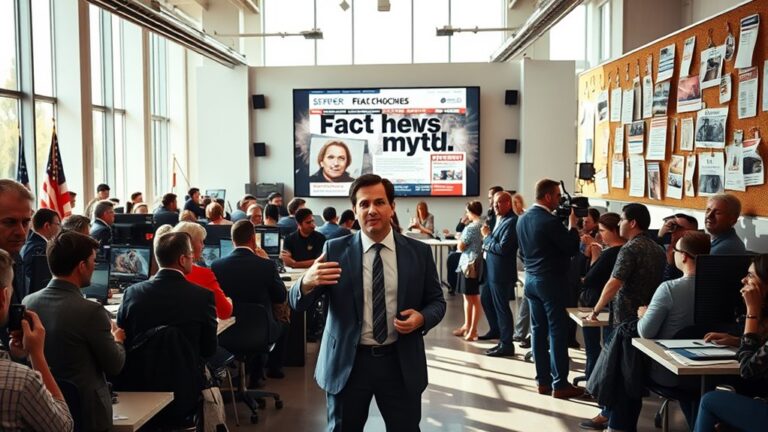




Fake news spreads swiftly via social media platforms, which prioritize engagement over accuracy. Sensationalized headlines and misleading visuals exploit emotions, prompting users to share without verification. This swift dissemination is amplified by algorithms favoring high-engagement content, creating echo chambers that hinder critical thinking. To avoid falling for fake news, individuals should cross-check facts against reputable sources, verify the credibility of information providers, and look for supporting evidence. More effective strategies await those who seek them.
Understanding the Nature of Fake News
As misinformation becomes increasingly prevalent, comprehending the nature of fake news is essential for maneuvering today's media environment. The origins of fake news can be traced back to various historical contexts, where sensationalism often overshadowed factual reporting. Over time, the evolution of misinformation has adapted to technological advancements, enabling quicker dissemination and wider reach. Initially, fake news was primarily disseminated through print media; nevertheless, the rise of the internet and social media has transformed its domain dramatically. Today, misinformation can spread swiftly, often blurring the lines between credible sources and fabricated stories. This evolution has led to a growing public challenge in discerning fact from fiction. Grasping these dynamics empowers individuals to critically evaluate the information they encounter, highlighting the importance of media literacy in combating the pervasive influence of fake news. In the end, recognizing the roots and progression of misinformation is essential for informed citizenship.
The Role of Social Media in Misinformation
Although social media platforms have transformed communication, they have additionally become fertile ground for the spread of misinformation. The intricate workings of social algorithms often prioritize engagement over accuracy, leading to the rapid dissemination of misleading information as viral content. This phenomenon capitalizes on emotional responses, encouraging users to share sensational stories without verification.
- Users often encounter misleading headlines that provoke strong reactions.
- Algorithms favor content that generates high engagement, regardless of truthfulness.
- Viral misinformation can reach millions in a matter of hours.
- Echo chambers reinforce beliefs, making it challenging to discern factual information.
- Users may lack critical thinking skills to evaluate sources effectively.
In this environment, misinformation flourishes, highlighting the need for increased media literacy and critical evaluation of content shared on social media. Recognizing these dynamics is vital for users seeking to navigate the vast expanse of information responsibly.
Common Tactics Used by Fake News Creators
Fake news creators often employ various tactics to attract attention and manipulate audiences. Sensationalized headlines, misleading visuals, and emotional manipulation are key strategies that improve the appeal of false information. Comprehending these common techniques is vital for recognizing and combating misinformation in today's media environment.
Sensationalized Headlines Techniques
As many readers are drawn to headlines that evoke strong emotions, sensationalized techniques have become a hallmark of fake news creators. These creators often employ clickbait tactics to attract attention, using methods that prioritize shock value over accuracy. Common strategies include:
- Exaggerated claims that distort the truth
- Fear-inducing language to provoke urgency
- Ambiguous phrases that leave readers curious
- Celebrity involvement to improve relatability
- Question-based headlines that spark intrigue
Misleading Visual Content
Visual content plays a significant role in the dissemination of fake news, often amplifying misleading narratives through deceptive imagery. Common tactics employed by fake news creators include image distortion, where photos are altered or taken out of context to misrepresent the truth. This manipulation skews perceptions and can lead audiences to believe false information. Infographic deception is another prevalent strategy; creators design infographics that present statistical data in misleading ways, often using selective data points or exaggerated visuals to support a specific agenda. These tactics exploit the human tendency to trust visual information, making it essential for consumers to critically evaluate the sources and authenticity of the images and infographics they encounter in news media. Awareness of these tactics can help mitigate the spread of misinformation.
Emotional Manipulation Strategies
As many people seek factual information, the emotional manipulation strategies used by creators of misleading news often plunge attention from the truth. These strategies are designed to exploit human emotions, making it easier for false narratives to spread. Common tactics include:
- Fear tactics that incite panic or anxiety about potential threats
- Emotional appeals that tug at the heartstrings, creating a sense of urgency
- Exaggerated claims that amplify feelings of anger or sadness
- Victimization narratives that position individuals as helpless, evoking sympathy
- Polarizing language that divides audiences and fuels outrage
The Psychological Impact of Fake News
Though the digital age has facilitated rapid access to information, it has likewise given rise to a concerning phenomenon: the psychological impact of fake news. Individuals often experience strong emotional responses when exposed to misleading information. Cognitive biases, such as confirmation bias and negativity bias, play a significant role in how people interpret and share such content. These biases can amplify fear, anger, and distrust, leading to polarized opinions and social division.
| Cognitive Bias | Emotional Response | Effect on Belief System |
|---|---|---|
| Confirmation Bias | Increased validation | Strengthened beliefs |
| Negativity Bias | Heightened anxiety | Focused on negative news |
| Availability Heuristic | Misjudged frequency | Distorted perception |
The interplay of these factors highlights the need for awareness and critical thinking when encountering news, as it can deeply affect individuals' thoughts and societal dynamics.
Strategies to Identify and Verify Information
How can individuals effectively discern the authenticity of information in an era rife with misinformation? To navigate this complex environment, one must employ a series of strategies that prioritize critical thinking and utilization of reliable fact-checking resources. The following approaches can aid in identifying and verifying information:
- Cross-reference facts with multiple reputable sources.
- Investigate the credibility of the author or organization behind the information.
- Examine the publication date to ascertain relevance.
- Look for supporting evidence, such as studies or expert opinions.
- Utilize dedicated fact-checking websites to confirm claims.
Building Media Literacy for a Safer Digital Experience
Media literacy is vital in today's digital environment, where individuals are constantly bombarded with information from diverse sources. Developing media literacy empowers individuals to engage in critical thinking, allowing them to discern credible information from misleading content. By enhancing their comprehension of how media operates, individuals can become more discerning consumers of information.
Effective media consumption involves recognizing biases, grasping the context in which information is presented, and evaluating the reliability of sources. Individuals should cultivate habits that promote skepticism and inquiry, challenging the narratives presented to them. Educational initiatives can play a significant role in nurturing these skills, equipping individuals with the tools necessary to navigate the intricacies of digital media.
Ultimately, building media literacy is fundamental for creating a safer digital experience, enabling individuals to make informed decisions and reducing the impact of fake news on society.
Frequently Asked Questions
What Are the Financial Motivations Behind Creating Fake News?
The financial motivations behind creating fake news often stem from the pursuit of advertising revenue. Content that generates high engagement on social media platforms can attract significant traffic, leading to increased ad impressions and potential profits. This revenue model incentivizes the production of sensational or misleading articles, as creators seek to capitalize on the viral nature of such content. As a result, the quest for financial gain can undermine the integrity of information disseminated online.
Can Fake News Influence Political Outcomes?
In the political arena, fake news can be a double-edged sword, swaying opinions and affecting outcomes. Through voter manipulation and misinformation tactics, misleading information can create confusion, leading to uninformed decisions at the polls. Such tactics may exploit emotional responses, ultimately guiding electoral results. As public trust in media wanes, the impact of fake news becomes more pronounced, highlighting the urgent need for critical thinking and media literacy among voters.
How Does Fake News Affect Public Health Decisions?
Fake news greatly impacts public health decisions, leading to confusion and mistrust among the population. Misinformation can distort health behavior, causing individuals to adopt harmful practices or ignore sound medical advice. This erosion of trust may result in lower vaccination rates, increased spread of diseases, and reluctance to seek necessary medical care. In the end, the pervasive nature of false information jeopardizes community health and undermines efforts to promote effective health interventions.
What Role Do Algorithms Play in Spreading Fake News?
Algorithms, designed to curate and personalize content, can paradoxically encourage both connection and division. Their inherent algorithm bias often prioritizes sensational content, which can lead to the proliferation of fake news. As users navigate information bubbles, they encounter a limited array of perspectives, reinforcing existing beliefs. This cycle not merely misinforms but additionally shapes public discourse, highlighting the critical need for awareness regarding the algorithms that govern online information consumption.
Are There Laws Against Creating or Sharing Fake News?
The issue of whether there are laws against creating or sharing fake news has gained prominence in recent years. Some jurisdictions have enacted fake news legislation aimed at enhancing media accountability and curbing misinformation. Nevertheless, the effectiveness of these laws varies greatly, with challenges related to defining fake news and balancing free speech rights. In the end, the legal environment surrounding fake news continues to evolve as society grapples with its implications on public discourse and trust.