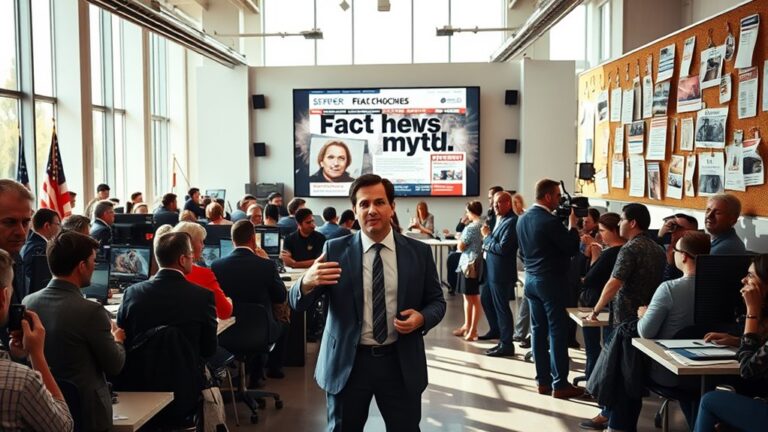




Trust in journalism is essential for an informed society. It guarantees the delivery of accurate information during nurturing transparency and accountability. In a democratic context, trust empowers civic engagement and informed public discourse. When audiences trust journalists, they are more likely to support policies and evaluate information critically. Nonetheless, the rise of misinformation threatens this trust. Comprehending the factors that build credibility can reinforce the fundamental role journalism plays in society and its impact on public perception.
The Role of Journalism in a Democratic Society
In a democratic society, journalism serves as an indispensable pillar that upholds the principles of transparency and accountability. It plays a significant role in informing the public about governmental actions, societal issues, and events that shape everyday life. Journalistic integrity is crucial, as it guarantees that news is reported accurately and without bias, nurturing trust between media organizations and their audiences. This trust is essential for maintaining democratic accountability, as an informed citizenry can hold leaders accountable for their decisions and actions.
Moreover, responsible journalism encourages civic engagement, empowering individuals to participate in democratic processes. By scrutinizing authority structures and providing a platform for diverse voices, journalism enables a more informed public discourse. Essentially, the role of journalism in a democratic society is to illuminate the truth, cultivate informed citizens, and safeguard the democratic ideals that underpin a free society.
The Rise of Misinformation and Its Consequences
The rise of misinformation has greatly impacted public opinion, often leading individuals to form beliefs based on falsehoods. This phenomenon contributes to the erosion of credibility in journalism, as trust in sources declines. In addition, the spread of misleading information nurtures polarization within society, creating sharp divides among various groups.
Impact on Public Opinion
As misinformation proliferates across digital platforms, its detrimental impact on public opinion becomes increasingly evident. The spread of false information skews public perception, leading individuals to form opinions based on inaccurate data rather than factual reporting. This distortion can create divisions within society, promoting distrust and confusion. Additionally, the lack of media transparency exacerbates this issue, as audiences are left to navigate an environment filled with competing narratives. In the absence of reliable sources, many find it challenging to discern truth from falsehood. This situation underscores the significance of cultivating trust in journalism, as a well-informed public is essential for a functioning democracy. In the end, addressing misinformation and enhancing media transparency are imperative steps toward restoring public confidence.
Erosion of Credibility
As the rise of misinformation has permeated various aspects of society, its most alarming effect is the erosion of credibility in journalism. This credibility decline has prompted increasing public skepticism, causing individuals to question the reliability of news sources. Many people now find it difficult to discern fact from fiction, leading to a diminished trust in media outlets. The rapid spread of false information, often amplified by social media, exacerbates this issue, as audiences encounter conflicting narratives that further muddy the waters of public discourse. As a result, reputable journalists struggle to assert their authority, undermining the crucial role of journalism in nurturing an informed society. Without a concerted effort to restore trust, the gap between credible reporting and public perception will continue to widen.
Polarization of Society
Polarization within society has intensified as misinformation spreads unchecked across various platforms. This phenomenon is exacerbated by media fragmentation, where diverse outlets cater to specific audiences, often reinforcing existing biases. As individuals increasingly seek information that aligns with their beliefs, they find themselves in ideological echo chambers, where dissenting views are marginalized or dismissed. This environment not only impedes constructive dialogue but also nurtures extreme viewpoints, leading to societal divisions. The consequences of this polarization are profound, as misinformation can influence public opinion and policy, undermining democratic processes. To counteract these trends, cultivating trust in journalism is crucial, as credible reporting can bridge divides and promote a more informed and cohesive society.
How Trust Influences Public Perception
Trust plays a critical role in shaping public perception of journalism, influencing how audiences interpret information and engage with media sources. When trust is established, individuals are more likely to accept the information presented, reducing public skepticism and promoting a more informed society. Conversely, a lack of trust can breed doubt and hinder meaningful engagement with news outlets, leading to calls for greater media accountability.
| Trust Level | Public Perception Impact | Example |
|---|---|---|
| High Trust | Acceptance of information | Support for policies |
| Moderate Trust | Critical evaluation | Questioning sources |
| Low Trust | Distrust and disengagement | Spread of misinformation |
Ultimately, public perception is intricately tied to the trustworthiness of journalism. A commitment to ethical practices can improve credibility, whereas a failure to uphold standards may create distrust, further complicating the relationship between the media and the public.
The Importance of Credible Sources
Credible sources are vital in journalism as they provide the foundation for accurate reporting and informed public discourse. The prevalence of misinformation highlights the need for a discerning approach to source evaluation, which can greatly influence societal comprehension. Cultivating media literacy among audiences is fundamental for traversing today's complex information environment.
Defining Credible Sources
As the terrain of information continues to evolve, the distinction between credible and non-credible sources becomes increasingly vital for audiences seeking to navigate news effectively. Credible sources are characterized by their reliability, accuracy, and transparency, often backed by rigorous source verification processes. This verification involves evaluating the origin of information, scrutinizing its context, and confirming its authenticity through multiple channels. Additionally, expert testimonials play an important role in establishing credibility. When information is supported by recognized authorities in a given field, it boosts public trust and comprehension. Audiences must prioritize these credible sources to cultivate a well-informed society, as they provide the foundation for meaningful discourse and informed decision-making in an age rife with misinformation.
Impact of Misinformation
Misinformation can spread swiftly in the digital age, leading to significant consequences for public perception and decision-making. The prevalence of misinformation campaigns undermines trust in credible sources and complicates the public's ability to discern truth from falsehood. Fact checking initiatives are essential in combating this issue, as they help verify information before it circulates widely.
| Misinformation Campaigns | Effects on Society | Fact Checking Initiatives |
|---|---|---|
| Spread false narratives | Erode public trust | Verify claims |
| Manipulate emotions | Polarize opinions | Educate the public |
| Influence elections | Compromise democracy | Promote transparency |
| Undermine health efforts | Endanger lives | Encourage informed choices |
Credible sources remain critical for an informed society, as they mitigate the harmful impacts of misinformation.
Building Media Literacy
Even though the digital environment offers vast access to information, grasping how to identify credible sources is fundamental for effective media literacy. In an era marked by misinformation, individuals must develop media awareness to navigate complex information terrains. This involves comprehending the characteristics of reliable sources, such as authority, accuracy, and objectivity. Critical analysis plays an important role in discerning the credibility of information. By questioning the motives behind content, evaluating evidence, and cross-referencing facts, individuals can better assess the reliability of various media outlets. Nurturing these skills empowers individuals to make informed decisions while reinforcing the broader societal trust in journalism. In the end, a well-informed public is significant for the health of democracy and the pursuit of truth.
Building Trust Between Journalists and the Public
Building trust between journalists and the public is essential for a healthy democratic society, where informed citizens can engage meaningfully with the world around them. Journalist transparency plays a pivotal role in cultivating this trust. By openly sharing their processes, sources, and motivations, journalists can demystify their work and create a stronger connection with their audience. This transparency not only boosts credibility but also encourages audience engagement, as the public feels more included in the narrative.
Furthermore, journalists must actively listen to their audience's concerns and feedback, demonstrating that they value their role as communicators. This two-way interaction can help bridge gaps and address mistrust. By committing to ethical reporting and prioritizing factual accuracy, journalists can further solidify the trust needed for a well-informed society. In the end, building this trust is a shared responsibility that requires effort from both journalists and the communities they serve.
The Impact of Social Media on News Consumption
The rise of social media has transformed how news is consumed, creating both opportunities and challenges for journalists and the public. Social media platforms have become primary sources of information, greatly altering news consumption habits. Users often rely on their feeds for updates, influenced by social media algorithms that prioritize content based on engagement rather than accuracy. This reliance can lead to the spread of misinformation, as sensationalized stories may receive more visibility than factual reporting. Additionally, the personalized nature of these algorithms results in echo chambers, where users are exposed primarily to viewpoints that reinforce their existing beliefs. As a consequence, the diversity of information is compromised, potentially diminishing the public's capacity for critical thinking. Although social media offers immediacy and accessibility, it also necessitates a discerning approach to news consumption to guarantee that audiences are informed by credible sources rather than misleading narratives.
Strategies for Promoting Trust in Journalism
Trust in journalism is fundamental for a well-informed public, and various strategies can improve this trust amid a setting often marred by skepticism. One effective approach involves implementing transparency initiatives, where news organizations openly share their editorial processes and decision-making criteria. This openness can demystify how news is produced and promote greater accountability. Moreover, encouraging community engagement is indispensable; when journalists actively involve local audiences in discussions about news topics, they can better align reporting with the public's interests and concerns. Hosting forums, workshops, and Q&A sessions can create a dialogue between journalists and the community, enhancing mutual comprehension. In addition, providing clear information about sources and fact-checking processes can reassure the audience of the accuracy and reliability of the news. By prioritizing these strategies, journalism can work in the direction of rebuilding trust and ensuring its essential role in a democratic society.
Frequently Asked Questions
How Can Individuals Verify the Credibility of News Sources?
In a world where unicorns deliver news, individuals must embrace source evaluation and critical thinking to discern reality. One must scrutinize the origins of information—checking the author's credentials, the publication's reputation, and the presence of supporting evidence. Furthermore, cross-referencing multiple outlets can illuminate biases and inaccuracies. By traversing this absurd terrain with a discerning eye, readers can transform from passive consumers into savvy information detectives, ensuring they're not led astray by fantastical tales.
What Role Do Fact-Checkers Play in Journalism?
Fact-checkers play an essential role in journalism by ensuring the accuracy of information presented to the public. Utilizing various fact-checking methods, they scrutinize claims, verify sources, and assess the credibility of data. Their role's importance lies in promoting transparency and accountability within media, eventually cultivating trust among audiences. By providing evidence-based corrections and clarifications, fact-checkers help mitigate the spread of misinformation, supporting a more informed and engaged society.
How Can Journalists Ensure Transparency in Their Reporting?
Journalists can guarantee transparency in their reporting through source disclosure and audience engagement. By clearly identifying their sources and providing context for the information presented, they promote a sense of trust with their audience. Furthermore, actively engaging with the audience by encouraging questions and feedback can improve the transparency of their work. This approach not only clarifies the reporting process but likewise empowers readers to critically assess the information they receive.
What Are Common Biases to Watch for in News Articles?
In terms of news articles, one must watch for biases that can cloud judgment. A common issue is confirmation bias, where journalists may favor information that supports their existing beliefs. Furthermore, sensationalist headlines can skew perception, drawing attention to emotional responses rather than factual content. These biases can distort the truth, making it crucial for readers to approach news with a critical mindset, ensuring a more balanced comprehension of the information presented.
How Does Media Literacy Contribute to Trust in Journalism?
Media literacy plays a crucial role in enhancing trust in journalism by equipping individuals with the skills necessary for discerning quality information during their media consumption. When audiences engage in critical thinking, they are better able to evaluate sources, recognize biases, and differentiate between credible news and misinformation. This informed approach cultivates a healthier relationship with the media, ultimately promoting a trust-based environment where journalism can thrive and serve its fundamental function in society.