


We're building the perfect home office from scratch, and it starts with evaluating our workspace requirements – identifying our specific needs, considering the type of work we'll be doing, and determining the necessary tools and layout. We'll choose a location that maximizes natural light, minimizes noise, and optimizes workflow. We'll select necessary equipment like a comfortable chair, high-quality monitor, and cable management systems. Lighting, acoustics, and ergonomic furniture will also play critical roles. As we set up our space, we'll discover the significance of each element – and we're just getting started on crafting the ideal workspace.
Assess Your Workspace Requirements
To create a functional home office, we need to start by evaluating our workspace requirements. This involves identifying our specific needs and priorities. We must consider the type of work we'll be doing and the tools we'll need to accomplish it. Will we be working on a computer, writing, or meeting with clients? Answering these questions will help us determine the layout and equipment we need.
For a comfortable and healthy workspace, we should invest in an ergonomic chair that provides proper support and a standing desk that allows us to switch between sitting and standing throughout the day. This will help reduce eye strain, back pain, and improve our overall well-being. A standing desk can also boost our energy levels and increase productivity.
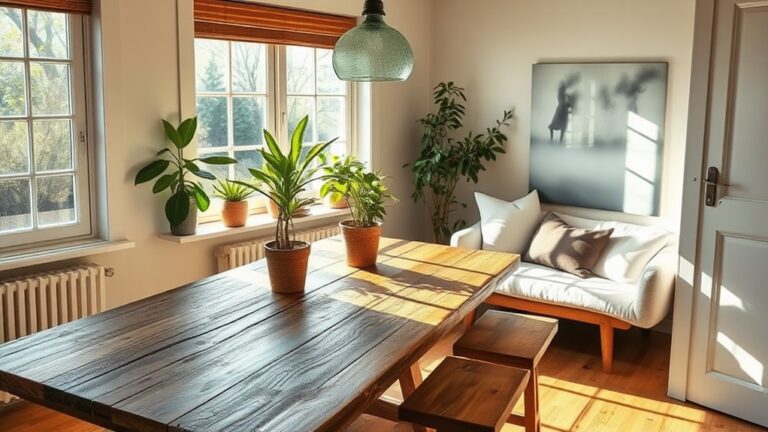
Natural light is crucial for a functional home office. We should place our workspace near a window to take advantage of natural light, which can help regulate our circadian rhythms and improve our mood. Adding some plants to our space can also purify the air, reduce stress, and create a calming atmosphere. By incorporating these elements, we can create a workspace that supports our physical and mental health while inspiring creativity and productivity. By carefully evaluating our workspace requirements, we can design a home office that meets our unique needs and helps us achieve our goals.
Choose the Perfect Location
In creating a functional home office, the location can make all the difference. When choosing the perfect spot, we take into account several factors that will impact our ideal setup. Natural light, noise levels, and accessibility are key considerations that can either improve or impede productivity.
To determine the perfect location, let's evaluate our options by considering the pros and cons of each space. Here's a comparison of different areas in the home:
| Location | Advantages and Disadvantages |
|---|---|
| Basement | Natural light limited, yet can be quiet and private. |
| Attic | Provides natural light, but may necessitate renovation and insulation. |
| Guest Room | Can offer quiet and privacy, but may not be suitable for frequent video calls. |
| Living Room | Provides natural light and accessibility, but could be distracting and noisy. |
When selecting the perfect location, we also take into account proper ventilation. A well-ventilated space can enhance air quality and reduce distractions. We consider the proximity to windows, air conditioning, and heating vents to ensure our home office remains comfortable throughout the day.
Ultimately, the perfect location is one that balances our need for natural light, accessibility, and comfort. By considering these factors and evaluating our options, we can create an ideal setup that nurtures productivity and sparks creativity.
Plan Your Office Layout
Once we've settled on the perfect location for our home office, planning the layout is the next vital step in creating an efficient workspace. It's time to think about how we want to utilize the space and how we can optimize our furniture placement to enhance productivity.
When planning our office layout, it's important to take into account both functionality and design aesthetics. We want our workspace to be not just efficient but also visually appealing. Here are some key points to keep in mind:
- Maximize natural light: Place our desk near a window to make use of natural light, which can enhance our mood and energy levels.
- Optimize furniture placement: Position our furniture in a way that promotes a comfortable workflow and minimizes distractions.
- Utilize vertical space: Make the most of our walls by using shelves, storage units, or a pegboard to keep our essential items within easy reach.
- Select a harmonious color scheme: Choose a color scheme that sparks creativity and productivity, and incorporates our personal style.
- Create a comfortable workspace: Incorporate ergonomic furniture and think about adding plants or artwork to create a welcoming atmosphere.
Select Essential Office Equipment
Now that we've planned our office layout, it's time to think about the necessary equipment we need to get work done. We'll start by focusing on the basics for our office desk, including a comfortable chair, adequate lighting, and storage for our supplies. We'll further explore the computer system requirements that will help us stay productive and efficient.
Office Desk Essentials
We're building a productive home office, and our workspace isn't complete without the right desk requirements. Desk organization is vital for maximizing our productivity and efficiency. A cluttered workspace can be overwhelming and hinder our ability to focus. To create a seamless workflow, it's crucial to invest in the right desk essentials.
Here are the top desk necessities for our home office:
- A desk organizer or tray to keep frequently used items, such as paper clips, pens, and sticky notes, within reach.
- A comfortable and ergonomic chair to support our back and promote good posture.
- A whiteboard or bulletin board for jotting down notes, reminders, and to-do lists.
- A desk lamp to provide adequate lighting and reduce eye strain.
- A cable management system to keep our workspace tidy and organized, reducing distractions and increasing productivity tips.
Computer System Requirements
As we transition from organizing our workspace to setting up our computer system, it's vital to focus on the equipment that drives our productivity. Our computer system requirements should prioritize both performance and comfort. Regarding computer monitor setup, we suggest investing in a high-quality display with adjustable height and tilt settings. This will allow us to maintain a comfortable working posture and reduce eye strain.
Together with a high-quality monitor, we also need to contemplate our seating arrangement. Ergonomic chair options are vital for sustaining our physical well-being during prolonged working hours. A chair with adjustable lumbar support, armrests, and a breathable fabric or mesh will guarantee we remain comfortable and focused throughout the day. Furthermore, we should take into account the specifications of our computer hardware, including the processor speed, RAM, and storage capacity. These factors will have a significant impact on our system's performance and our overall productivity. By carefully selecting each component, we can create a computer system that meets our unique needs and supports our innovative endeavors.
Consider Lighting Options
When designing our perfect home office, it's easy to overlook the significance of lighting, but it plays a crucial role in our productivity and comfort. The right lighting can enhance our mood, energy levels, and focus, whereas improper lighting can result in eye strain, headaches, and reduced productivity. To create an ideal lighting setup, we need to take into account both natural and artificial lighting options.
Natural light is always the superior choice, so if possible, position our home office near a window to make the most of the sun's rays. Nevertheless, this isn't always feasible, and that is where artificial lighting comes into play. We have a variety of options to choose from, including:
- Layered lighting: combining various light sources to establish a harmonious and visually appealing ambiance
- Task lighting alternatives: utilizing desk lamps or under-cabinet lighting to brighten specific work areas
- Color temperature: opting for light bulbs with a color temperature that enhances focus and productivity
- Dimming capabilities: setting up dimmer switches or using smart light bulbs to regulate lighting levels
- Energy efficiency: selecting LED or CFL bulbs to lower energy consumption and shrink our environmental footprint
Invest in Ergonomic Furniture
After setting up our ideal lighting, it's time to focus on the foundation of our home office – the furniture. Investing in ergonomic furniture is vital for a productive and healthy workspace. We'll start with the most important piece: the chair. An ergonomic chair offers numerous benefits, including reduced back pain, improved posture, and increased comfort. Look for a chair with adjustable height, lumbar support, and a breathable fabric. These features will allow us to customize the chair to our needs, ensuring we stay focused and energized throughout the day.
Next, let's consider our desk options. Traditional sitting desks can lead to a sedentary lifestyle, but we can combat this with standing desk options. Standing desks allow us to switch between sitting and standing, promoting better posture, increased energy, and even weight loss. We can choose from manual or electric standing desks, depending on our preferences and budget. Some desks come with customizable height settings, allowing us to adjust the desk to our needs. By incorporating an ergonomic chair and a standing desk, we'll create a workspace that supports our physical and mental well-being. This foundation will enable us to stay productive, focused, and innovative, making our home office a space where we can thrive.
Add Storage and Organization
We can't have a productive home office without tackling the issue of clutter and disorganization. To create a space that truly works for you, we'll start by decluttering your workspace and getting rid of anything you don't need. From there, we can explore custom storage solutions that fit your unique needs and keep your office supplies and paperwork in check.
Declutter Your Workspace
A cluttered workspace is the enemy of productivity. We can't afford to waste time searching for misplaced items or getting distracted by visual chaos. That's why decluttering our workspace and creating a minimalist design that promotes focus and efficiency is crucial.
To achieve a clutter-free workspace, we need to adopt a few simple habits:
- Get rid of unnecessary items that are taking up space and serving no purpose.
- Designate a specific place for each item, making it easier to find what we need when we need it.
- Establish a daily routine of tidying up our workspace to maintain a sense of order.
- Use a Feng Shui arrangement to position our furniture and items in a way that promotes balance and harmony.
- Schedule regular deep cleans to get rid of dust, dirt, and other distractions that can hinder our productivity.
Custom Storage Solutions
Most home offices lack sufficient storage space, leading to clutter and disorganization. As we build our perfect home office, we want to create custom storage solutions that maximize our space and keep our workspace organized and efficient.
One way to achieve this is by incorporating hidden compartments and space saving solutions. For instance, we can install a desk with built-in drawers or a secret compartment to store valuable items. We can also utilize wall-mounted shelves with foldable tables or retractable keyboards to create a multi-functional workspace.
Custom shelving and modular design are fundamental components of our storage solutions. We can design a modular shelving system that adapts to our changing needs, with removable and adjustable shelves to accommodate different types of office supplies. This modular design allows us to easily reconfigure our storage space as our needs evolve, ensuring that our home office remains clutter-free and organized. By investing in custom storage solutions, we can create a more efficient and productive workspace that supports our work style. Building custom shelving enables us to maximize every inch of available space, tailoring storage to fit our specific requirements. With a well-designed system, we can seamlessly store documents, office tools, and personal items while maintaining a clean and professional environment. This approach not only enhances organization but also contributes to a more aesthetically pleasing and functional workspace.
Optimize Office Acoustics
About 40% of noise pollution originates from within our own homes, and that's particularly true in the case of our home offices. To create a productive workspace, we need to optimize our office acoustics. We've found that incorporating soundproofing solutions can make a huge difference. This can involve adding mass-loaded vinyl to walls, installing acoustic insulation in ceilings, and using sound-absorbing materials on floors.
In addition to soundproofing, we utilize privacy partitions to create separate areas for different activities. These partitions help reduce noise levels and create a sense of separation and visual privacy.
To further improve our office acoustics, we implement:
- Acoustic paneling on walls and ceilings to absorb sound waves
- Noise canceling headphones for focused work and video calls
- Area rugs to minimize echo and footsteps noise
- White noise machines to generate a constant, soothing sound
- Plants with thick leaves to absorb sound waves and purify the air
Implement Effective Cabling
We've taken care of the acoustics, now it's time to tackle the frequently neglected aspect of cabling in our home office. Implementing an effective cabling system is vital for a clutter-free workspace and to guarantee our devices function smoothly. To achieve this, we'll focus on two key components: Cable Management Systems and Cord Organization Techniques.
Cable Management Systems
Effective cable organization systems are the foundation of a well-structured home office. A clutter-free workspace not just increases productivity but also improves the overall visual appeal of the room. To achieve this, we focus on implementing a strong cable organization strategy.
We begin by evaluating our specific requirements and identifying the types of cables and wires we'll be working with. This aids us in selecting the most appropriate wire management solutions. Here are some key elements of an effective cable organization system:
- Cable ties and zip ties to keep cables bundled and arranged
- Cable organizers and cable boxes to hide unsightly wires
- Desk grommets to guide cables through, keeping them hidden
- Wall-mounted cable organization systems for a modern, minimalist appearance
- Color-coded labels to distinguish between different cables and wires
Cord Organization Techniques
When setting up a home office, our primary focus is on organizing cords and cables in a way that promotes productivity and reduces clutter. Effective cord organization techniques are vital in maintaining a well-designed and functional workspace. We've found that implementing a cable organization system that incorporates wire management is key to achieving this goal.
To start, we label each cord and cable, making it easier to identify what they're connected to. We then use cable ties or zip ties to group similar cords together, keeping them organized and untangled. For added convenience, we utilize cord organizers, such as cable clips or cable boxes, to manage multiple cords at once.
Add Decor and Personal Touches
Our home office is more than just a space for productivity – it's a reflection of our personality and work style. This is where we can infuse our space with personalized decor and unique touches that make us feel inspired and motivated.
A well-designed home office can greatly impact our productivity and overall job satisfaction. To add a personal touch to our space, we can consider the following elements:
- Inspirational Artwork: Hang motivational quotes, artwork, or photographs that reflect our personality and work style.
- Plants and Greenery: Add some greenery to our space to bring in a natural touch and purify the air.
- Customized Lighting: Install unique lighting fixtures or table lamps that reflect our personal style.
- Personal Mementos: Display personal mementos, such as family photos, awards, or collectibles, to add a touch of warmth to our space.
- Color Scheme: Choose a color scheme that reflects our personality and work style, and incorporate it into our furniture, walls, and decor.
Ensure Technology Integration
Enhance Technology Integration
How do we modernize our home office? We focus on seamless tech connectivity. In today's fast-paced, digital world, staying connected is vital for productivity and success. To achieve this, we need to incorporate state-of-the-art technology and integration solutions that streamline our workflow.
A key aspect of tech connectivity is having the right hardware in place. Here's a breakdown of the fundamental components:
| Component | Description | Benefits |
|---|---|---|
| High-speed router | Provides fast and reliable internet connectivity | Boosts productivity, reduces downtime |
| Smart display | Offers a stylish, interactive interface for presentations and video conferencing | Enhances collaboration, saves time |
| Wireless charging pad | Conveniently charges devices without cluttering the workspace | Fosters organization, reduces stress |
Finalize and Test Your Space
Now that we've carefully curated our home office space, it's time to put the finishing touches in place and test its functionality. We want to make sure that every element, from the ergonomic chair to the lighting fixtures, works in harmony to create a productive and comfortable work environment.
To finalize our space, we need to test each component to verify it meets our needs. Here are some key areas to focus on:
- Ergonomic chair testing: Adjust the chair height, armrests, and tilt to find the perfect position for long hours of work. Make certain your feet are flat on the floor or on a footrest, and your back is straight.
- Lighting fixture adjustments: Experiment with different lighting settings to find the perfect balance between brightness and comfort. Consider investing in smart light bulbs that can adjust color temperature and brightness.
- Noise level assessment: Test the noise level in your space to verify it's conducive to focus. Consider adding sound-absorbing materials or white noise machines if necessary.
- Technology integration testing: Test all your devices and technology to verify they're working seamlessly together.
- Workflow assessment: Test your workflow in the new space to make sure everything is within reach and easily accessible. Make any necessary adjustments to optimize your productivity.
Frequently Asked Questions
Can I Turn a Garage Into a Home Office Space?
We often find ourselves wondering if that underutilized garage can be repurposed. The answer is yes, you can turn a garage into a functional home office space. A garage conversion can be an excellent way to expand your work area. To guarantee productivity, consider incorporating privacy solutions like soundproofing, room dividers, or stylish glass partitions to create a quiet and distraction-free environment that sparks innovation and boosts your work flow.
How Do I Deal With Noise From Family Members?
We understand what you're thinking: "I want a productive home office, but how do I tune out the noise?" We've been there too. To deal with noise from family members, we suggest using noise cancellation headphones or a white noise machine to block out distractions. Consider soundproofing techniques like acoustic panels or mass-loaded vinyl to create a quieter space. It's time to take control of your work environment and boost your productivity.
Are Standing Desks Suitable for Long Work Hours?
We're often asked if standing desks are suitable for long work hours. Our answer is yes, when set up correctly. An ergonomic setup is key to reaping the benefits of a standing desk. By incorporating it into your workspace, you can boost productivity and enjoy health benefits like fatigue prevention. With the right setup, standing desks can help you stay focused and energized throughout the day, making them a game-changer for our daily work routines.
Can I Use a Home Office for Non-Work Activities?
Like a Swiss Army knife, our home office can be a versatile space that serves multiple purposes. We shouldn't limit it to just work. It's perfect for non-work activities too. Think about it, having a designated space for hobbies or relaxation can actually boost our work-life balance and productivity by minimizing distractions. We can even schedule personal activities around our work hours, making the most of our space and time.
Do I Need a Permit to Build a Backyard Office?
We're excited to start constructing our backyard office, but before we begin, we need to check if a permit is needed. Permit requirements differ, so we'll investigate our local zoning laws to determine if our home workspace complies. We'll also consult with our homeowner's association, if relevant, to make sure we're not breaching any rules. It's crucial to conduct our due diligence to prevent any expensive fines or delays.