


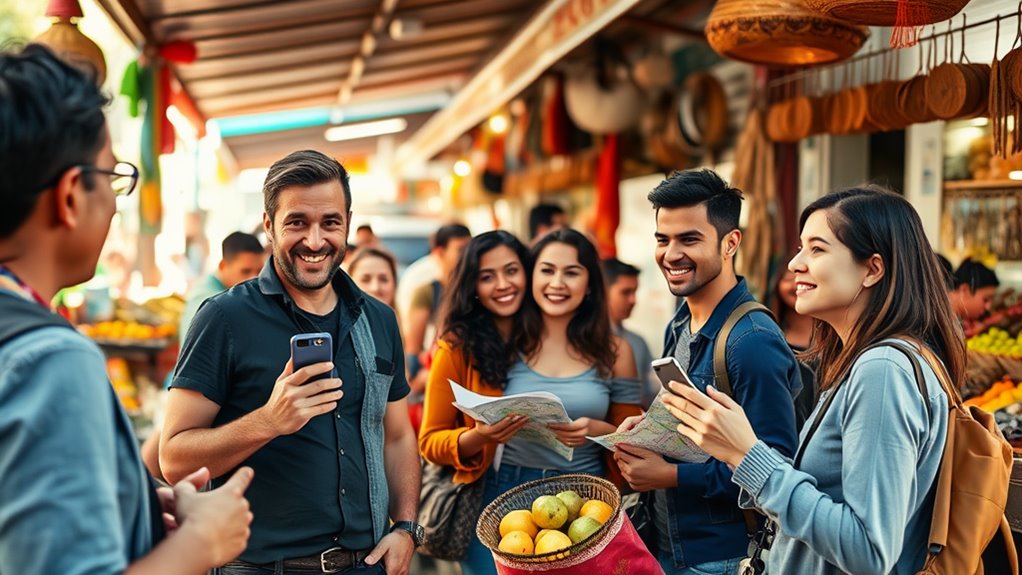
To navigate language barriers during traveling, start by learning basic phrases like "hello" and "thank you." Utilize translation apps with voice recognition and offline capabilities. Master crucial words, and don't hesitate to engage with locals through cultural activities. Use body language, gestures, and visual aids to communicate effectively. Remember, patience and an open mind are key. By embracing these strategies, you can improve your travel experience and create lasting connections with those you meet along the way.
Understand the Basics of the Local Language
When you travel to a new country, picking up the basics of the local language can make a huge difference in your experience. Start with fundamental phrases and basic vocabulary that can help you navigate everyday situations. Words like "hello," "thank you," and "please" can open doors and create friendly interactions.
Don't shy away from practicing pronunciation tips, either. Listening to native speakers and mimicking their sounds can improve your communication skills. Try repeating phrases out loud to build confidence. You'll find that locals appreciate your effort, and it might even lead to spontaneous conversations.
Immerse yourself in the language by labeling items in your temporary home or practicing with locals. This active approach not just boosts your language skills but additionally connects you more deeply with the culture. Embracing the local language is a significant step toward enjoying your adventure to the fullest.
Utilize Language Translation Apps
Learning the basics of the local language is a great start, but sometimes you need a little extra help to bridge the gap. That's where translation apps come in. These handy tools can transform your travel experience, allowing you to connect with locals and navigate new places with ease. Look for apps with robust translation features, like voice recognition and offline capabilities, so you're always prepared, even in remote areas.
To improve your user experience, try to familiarize yourself with the app's layout before your trip. Practice using it in various scenarios, like ordering food or asking for directions. Some apps even have built-in phrasebooks, which can be a lifesaver. Don't hesitate to use these tools to express yourself freely. With the right translation app, you'll conquer language barriers and fully embrace the adventure that awaits you!
Learn Essential Phrases and Words
A few vital phrases and words can make a significant difference in your travel experience. Knowing how to communicate can open doors to new adventures and connections. Here are some key phrases you should master:
- Hello/Goodbye
- Thank you
- Please
- Where is…?
Using language flashcards can help you memorize these phrases quickly. Practice them daily until they feel natural. Don't shy away from making mistakes; it's all part of the learning process.
When it comes to pronunciation, listen to native speakers through apps or online resources. Mimicking their sounds will improve your confidence and clarity.
Body Language and Non-Verbal Communication
Dominating key phrases and words is just the beginning of effective communication during traveling. Comprehending body language and non-verbal cues can open doors to meaningful connections. Your facial expressions convey emotions that words sometimes can't. A smile can break the ice, whereas a frown may signal disapproval or confusion.
Cultural gestures likewise play a significant role. In some places, a thumbs-up is a sign of approval, whereas in others, it might be offensive. Pay attention to the gestures around you and adapt accordingly.
When you're lost or need assistance, using open body language—like an open palm or nodding—can invite help. Remember, your non-verbal communication can transcend language barriers, allowing you to express friendliness and curiosity. Embrace the freedom that comes with comprehending these subtle cues, and you'll find your travels enriched in ways you never envisioned.
Engage With Locals Through Cultural Activities
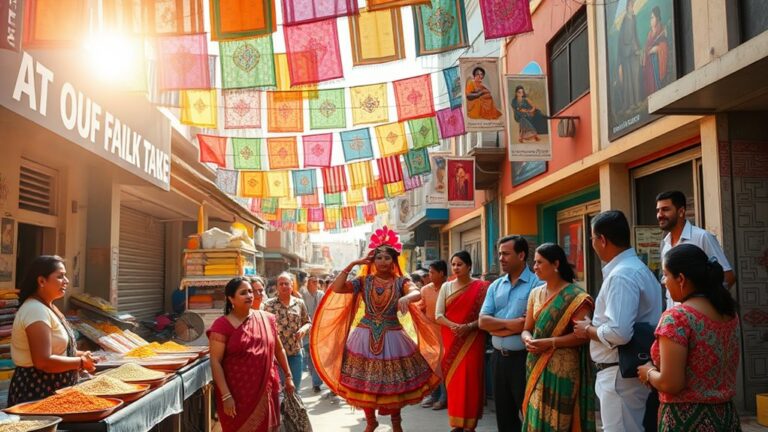
Getting involved in local festivals and community workshops can be a fantastic way to connect with locals, even though you don't share a common language. These activities not just immerse you in the culture but additionally provide opportunities for genuine interaction. You'll find that shared experiences often bridge communication gaps in surprising ways.
Participate in Local Festivals
How can immersing yourself in local festivals help bridge language gaps during traveling? Participating in these lively celebrations allows you to connect with locals in a unique way, transcending the barriers of language. You'll experience the heart of a culture through its festival traditions and local customs.
Here's why you should engage:
- Embrace the Atmosphere: Feel the energy and excitement of the community.
- Taste the Flavors: Savor traditional dishes that tell stories of the region.
- Learn Through Dance: Join in on dances that convey cultural narratives.
- Make New Friends: Engage in conversations, even though it's through gestures and smiles.
Join Community Workshops
Often, joining community workshops is a fantastic way to engage with locals during overcoming language barriers. These activities provide a unique opportunity for language immersion, allowing you to connect with the culture more deeply. You'll learn new skills, meet like-minded individuals, and break down communication walls through shared experiences.
| Workshop Type | Benefits |
|---|---|
| Cooking Classes | Learn local recipes and customs |
| Art Workshops | Express creativity and connect |
| Dance Lessons | Enjoy rhythm and movement together |
| Language Exchange | Practice speaking with locals |
Use Visual Aids and Gestures
Visual aids and gestures can be your best friends when tackling language barriers during traveling. They're simple yet influential tools that help you connect with locals and navigate unfamiliar places. By using visual cues, you can make your intentions clear without uttering a single word. Here are some effective gesture examples to keep in mind:
- Pointing: Direct at objects or locations to convey what you need.
- Thumbs Up: Use this universal sign to indicate approval or that everything's okay.
- Drawing: Sketching a quick map or item can be incredibly helpful.
- Facial Expressions: Smile or frown to convey emotions and intentions.
Embrace these strategies, and you'll find that communication opens up a world of freedom and connection. Don't hesitate to let your creativity flow; sometimes, a picture is worth a thousand words!
Be Patient and Open-Minded
During exploring new destinations, being patient and open-minded can transform your experience, especially when faced with language barriers. Embrace cultural patience; it allows you to connect with locals on a deeper level. When words fail, a smile or a gesture can bridge gaps that language can't.
Remember, everyone's trying to communicate, and a little awareness goes a long way. If you stumble through a phrase or mispronounce a word, laugh it off. These moments often lead to the best stories and connections.
Engage in mindful interactions by actively listening and observing. This not solely helps you grasp the essence of the conversation but additionally shows respect for the local culture. So, let go of the frustration and enjoy the adventure. Each miscommunication is an opportunity to learn and grow, turning potential frustrations into memorable experiences. Being patient and open-minded will enrich your travels beyond measure.
Frequently Asked Questions
What Should I Do if I Can't Communicate Effectively?
If you can't communicate effectively, don't panic—you're not stuck in the Stone Age! Use body language to convey your message; gestures and facial expressions can go a long way. Grab visual aids like pictures or maps to bridge the gap. It's all about creativity and resourcefulness. Embrace the adventure, and remember, communication isn't just about words. With a little effort, you'll connect with others and enjoy the freedom of exploration!
Are There Specific Cultural Sensitivities to Consider When Speaking?
When speaking, it's vital to take into account cultural sensitivities. Different cultures have unique gestures etiquette that can change meanings entirely. For instance, a thumbs-up might be positive in one place but offensive in another. Additionally, tone importance can't be overlooked; your delivery can convey respect or aggression. By being aware of these nuances, you'll encourage better connections and show respect, allowing for more genuine interactions that celebrate cultural differences.
How Can I Improve My Language Skills Before Traveling?
To improve your language skills before traveling, try using language apps that offer interactive lessons and quizzes. They make learning fun and engaging! Furthermore, create vocabulary flashcards for crucial phrases and words. This way, you'll reinforce your memory and boost your confidence. Practice speaking with friends or through language exchange platforms. With dedication and these tools, you'll feel more prepared and free to explore new cultures and connect with locals!
What Are the Best Offline Translation Methods?
When you're looking for the best offline translation methods, consider using visual translation apps that don't require internet access. They can help you understand signs and menus quickly. Printed phrasebooks are another fantastic option; they're lightweight and packed with crucial phrases. Having these tools in your bag lets you explore freely without worrying about communication barriers. Embrace the adventure and connect with locals, regardless of whether you can't speak their language fluently!
How Do I Handle Misunderstandings During Conversations?
When you face misunderstandings during conversations, focus on contextual cues to clarify meaning. Don't hesitate to ask questions if something feels off. Active listening is essential; it helps you pick up on the speaker's tone and body language. Repeating what you think you heard can likewise clear things up. Stay patient and open-minded, and keep in mind that communication is a two-way street. Embrace the challenge—it's part of the adventure!