


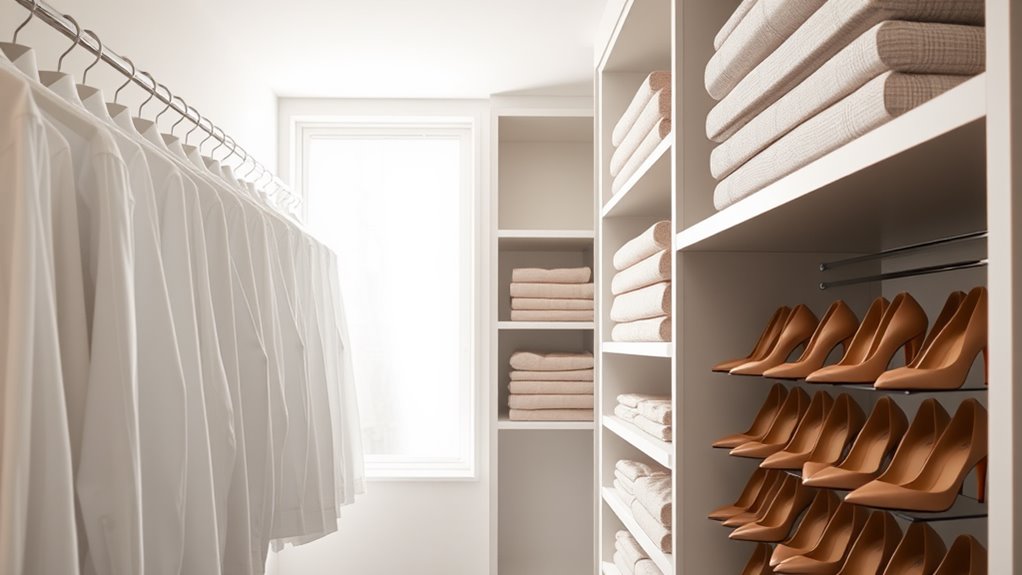
To create your dream closet, start by purging items that no longer serve a purpose or spark joy. Then, categorize and label your belongings to identify patterns and duplicates. Assign a home for each item, utilizing vertical storage solutions like shelf risers and hanging organizers to maximize space. Next, design a functional layout that improves flow and efficiency. By implementing these strategies, you'll be well on your way to a perfectly organized closet that exudes calm and control – and there's more to explore to take your space to the next level.
Purge and Categorize to Spark Joy
As you stand before your closet, ready to tackle the intimidating task of organizing it, bear in mind that the first step in igniting joy is to purge and categorize. You must adopt a declutter mindset, letting go of items that no longer serve you. Emotional attachment can be a major obstacle, but keep in mind that holding onto something "just in case" won't bring you joy. Be honest with yourself – when was the last time you wore that shirt or used that accessory? If it's been over a year, it's probably safe to let it go. Take everything out of your closet and sort items into categories like tops, bottoms, and accessories. This will give you a clear view of what you have and help you identify patterns and duplicates. By purging and categorizing, you'll be able to see what sparks joy and what doesn't, making it easier to make intentional decisions about what to keep and what to let go of.
Assign a Home for Each Item
You're now ready to give each item a designated spot in your closet. This means categorizing and grouping similar items together, like all dresses or all t-shirts, and storing out-of-season or less frequently used items out of sight. By doing so, you'll create a sense of order and make it easier to find what you need when you need it.
Designate a Spot
Assigning a home for each item is crucial to maintaining a perfectly organized closet. This means designating a spot for everything, from your favorite sweater to your go-to pair of shoes. By doing so, you'll create clear boundaries and prevent clutter from building up in the future.
| Item | Designated Space |
|---|---|
| Coats | Back of the door hooks |
| Accessories | Top shelf bins |
| Shoes | Floor-level shelves |
Categorize and Group
Creating a designated space for each item is essential, whereas categorizing and grouping similar items together takes your closet organization to the next tier. You'll want to explore different organization styles to find what works best for you. Try grouping techniques like categorizing by type, season, or frequency of use. For example, group all your dresses together, followed by tops, pants, and outerwear. Within each group, organize items by color, texture, or length. This system allows you to see everything at a glance, making it easier to find what you need. By categorizing and grouping similar items, you'll reduce clutter, save time, and improve your overall closet experience.
Store Out of Sight
Now that you've categorized and grouped your clothes, it's time to think about where to store each item. Assign a home for each piece to maintain your newly organized closet. Utilize hidden storage and concealed organization to keep items out of sight, freeing up space and reducing visual clutter. Store out-of-season clothes in labeled bins or vacuum-sealed bags on high shelves or underbed storage. Designate a specific area for accessories like hats, scarves, and belts, using stackable drawers or hanging organizers. By giving each item a designated spot, you'll guarantee everything has its place, making it easier to find what you need and maintain your perfectly organized closet.
Maximize Vertical Storage
As you stand in front of your closet, you're likely aware of the vast, untapped potential lurking above your head. That's where maximizing vertical storage comes in. By utilizing the strength of shelf risers and hanging organizers, you can unleash a wealth of new storage possibilities. Install shelf risers to double or triple your shelf space, perfect for storing folded items like sweaters or jeans. Hanging organizers, in contrast, allow you to utilize the often-wasted space along the back of your closet door or walls. You can hang belts, scarves, or bags, keeping them organized and easily accessible. By maximizing your vertical storage, you'll be amazed at how much more you can fit in your closet without sacrificing style or functionality.
Utilize Double Rods and Shelves
As you're making the most of your closet's vertical space, don't overlook the horizontal opportunities offered by double rods and shelves. Double rods provide double the hanging space, allowing you to store more items without overcrowding the floor. This is especially beneficial for items like dresses, coats, and suits that are best hung together.
When it comes to shelving options, consider the following:
- Fixed shelves for storing folded items like t-shirts and jeans.
- Adjustable shelves for accommodating items of varying heights, like baskets and bins.
- Floating shelves for adding a touch of modernity and creating a sleek, minimalist look.
Implement a Color-Coded System
With your closet's vertical and horizontal spaces maximized, it's time to focus on creating a sense of visual order. A color-coded system is the perfect way to achieve this. By grouping similar hues together, you'll create visual harmony and make it easier to find what you're looking for. According to color psychology, certain colors can even evoke emotions and affect your mood. For instance, warm colors like orange and red can energize you, whereas cool colors like blue and green can calm you. Organize your clothes by color to create a sense of flow and make your closet feel more peaceful. Start with the basics: group whites, blacks, and neutrals together, then move on to brighter colors. You can even take it a step further by organizing within each color group by shade, from light to dark. The result will be a closet that's not just organized but also visually stunning.
Create a Functional Layout
You've optimized your closet's storage and implemented a color-coded system, now it's time to create a functional layout that makes the most of your space. A well-designed layout can improve your closet flow and boost space efficiency. To accomplish this, consider the following:
- Zone your closet: Divide your closet into sections or zones dedicated to specific types of items, such as tops, bottoms, and accessories. This will help you maintain a logical flow and make it easier to find what you need.
- Prioritize frequently worn items: Place your most frequently worn items at eye level, making them easily accessible and reducing clutter.
- Leave breathing room: Make sure there's sufficient space between shelves and rods to prevent overcrowding and allow for effortless navigation.
Make the Most of Corners and Nooks
| Corner Solution | Nook Organizer |
|---|---|
| Double Rod Corner Shelf | Hanging Nook Organizer with Pockets |
| Corner Carousel with Baskets | Fold-Down Nook Shelf with Hooks |
| Adjustable Corner Shelf | Sliding Nook Drawer with Dividers |
| Corner Shelving Unit with Drawers | Nook Organizer with Cubbies and Shelves |
Invest in Storage Containers and Bins
You'll be amazed at how much more organized your closet can be with the right storage containers and bins. By using them, you can label and categorize items, utilize vertical space, and hide cluttered areas, creating a more streamlined and peaceful space. With a few well-chosen containers and bins, you'll be able to corral your belongings and keep them out of sight.
Label and Categorize Items
As you begin to tackle the task of organizing your closet, categorizing and labeling items is an vital step in creating a system that works for you. This significant step guarantees you can easily find what you need and maintain your newly organized space. To get started, implement effective labeling strategies and categorization techniques.
- Group similar items together, such as tops, bottoms, and dresses, to create a logical flow in your closet.
- Use descriptive labels to identify what's inside storage bins and containers, making it easy to find what you need at a glance.
- Color-code labels to create a visually pleasing and organized system that's easy to navigate.
Utilize Vertical Space
Now that your closet is categorized and labeled, it's time to maximize your closet's potential by utilizing vertical space. You'll be amazed at how much more storage you can fit in without taking up valuable floor space. Invest in shelf organizers that can hold bins, baskets, or boxes to store items like sweaters, jeans, or accessories. Consider wall-mounted racks for hanging belts, hats, or bags. These clever solutions will keep your belongings organized, visible, and easily accessible. By leveraging your closet's vertical space, you'll create a more efficient and functional area that makes your daily routine a breeze. Get creative and think upward – your closet will thank you!
Hide Cluttered Areas
Owing to a perfectly organized closet being all about maintaining a sense of calm, it's essential to conceal cluttered areas that can instantly disrupt the serene atmosphere. Invest in storage containers and bins to create hidden storage and clutter camouflage.
To effectively hide cluttered areas, consider the following:
- Use stackable bins to store items like socks and underwear, keeping them out of sight.
- Invest in a storage ottoman or cube to stash away items like blankets or out-of-season clothing.
- Utilize hanging organizers with pockets to store accessories like belts, scarves, or hats, keeping them hidden from view.
Maintain Your Space With Regular Editing
By regularly editing your closet's contents, you'll prevent clutter from building up again and guarantee your space remains organized and functional. Schedule regular updates to maintain your closet's organization. Set reminders to review your closet every few months to verify it still aligns with your needs and style. Conduct seasonal reviews to swap out items that are no longer relevant or in season. For example, store away winter clothing during summer and vice versa. This will keep your closet fresh and prevent clutter from accumulating. By doing so, you'll maintain a space that's efficient, stylish, and customized to your lifestyle. Remember, editing your closet is an ongoing process, and staying on top of it will confirm your space remains a haven of organization and functionality.
Frequently Asked Questions
How Do I Decide What to Keep and What to Donate?
As you stand amidst the chaos, it's like trying to find a needle in a haystack – what to keep, what to donate? Start by asking yourself: does it hold sentimental value or serve a functional purpose? Be ruthless with items that don't make the cut. Consider seasonal items, like winter coats or summer sandals, and store them out of sight to free up space. You'll be left with a curated collection that sparks joy and makes your life easier.
Can I Use a Closet Organizer Kit or DIY?
You're wondering if you should go for a closet organizer kit or take the DIY route? It's a great question! You've got two options: DIY solutions that let you customize to your heart's content, or store-bought options that offer a quick, hassle-free fix. Consider your budget, time, and creativity level. If you're handy and love a challenge, DIY might be the way to go. But if you're short on time, a pre-made kit can be a lifesaver. Either way, you'll be on your way to a perfectly organized closet in no time!
How Often Should I Clean and Dust My Closet?
You know how a garden needs regular watering to thrive? Similarly, your closet requires regular maintenance to stay organized and clutter-free. Set a cleaning schedule to dust and vacuum your closet every 2-3 weeks, and do a deep clean every 3-4 months. This will prevent dust bunnies from multiplying and keep your clothes looking their best. By staying on top of closet maintenance, you'll avoid the overwhelming task of tackling a messy closet all at once.
What if I Have Limited Closet Space and Budget?
You’re working with limited closet space and a tight budget – don’t worry, you can still get creative! Look for budget-friendly solutions like repurposing items you already own, like using old crates or bins to store items. Consider investing in multi-functional storage pieces, like a storage ottoman or a hanging organizer with pockets. With a little ingenuity, you can maximize your space without breaking the bank. You can also make use of vertical space by installing shelves or hooks to keep things organized and easily accessible. When it comes to your wardrobe, try to pack light without leaving essentials by prioritizing versatile pieces that can be mixed and matched. A little planning and creativity will help you maintain a tidy, functional space while staying within your budget.
Can I Organize My Closet to Fit My Personal Style?
You want to make your closet a reflection of who you are! Absolutely, you can organize your space to fit your personal style. Think about the closet aesthetics that resonate with you – modern, bohemian, minimalist, or eclectic. Incorporate elements that speak to your taste, like bold colors, statement pieces, or sleek lines. By doing so, you'll create a space that not only functions well but in addition inspires your daily routine and makes you feel confident and authentic.