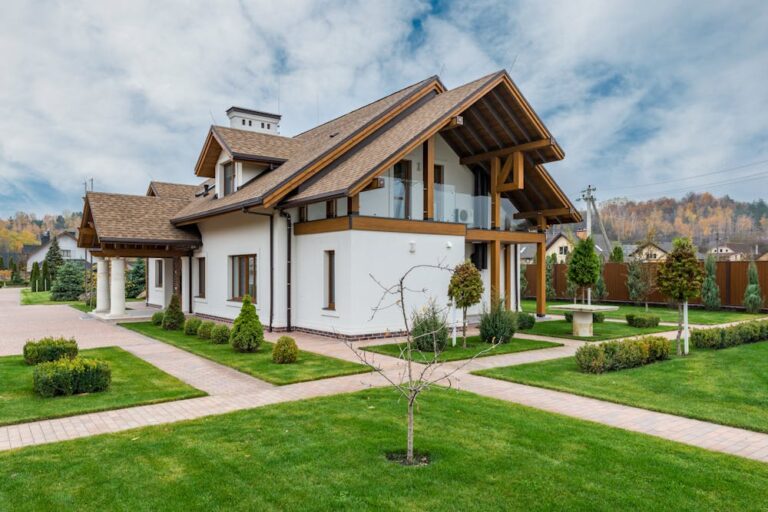



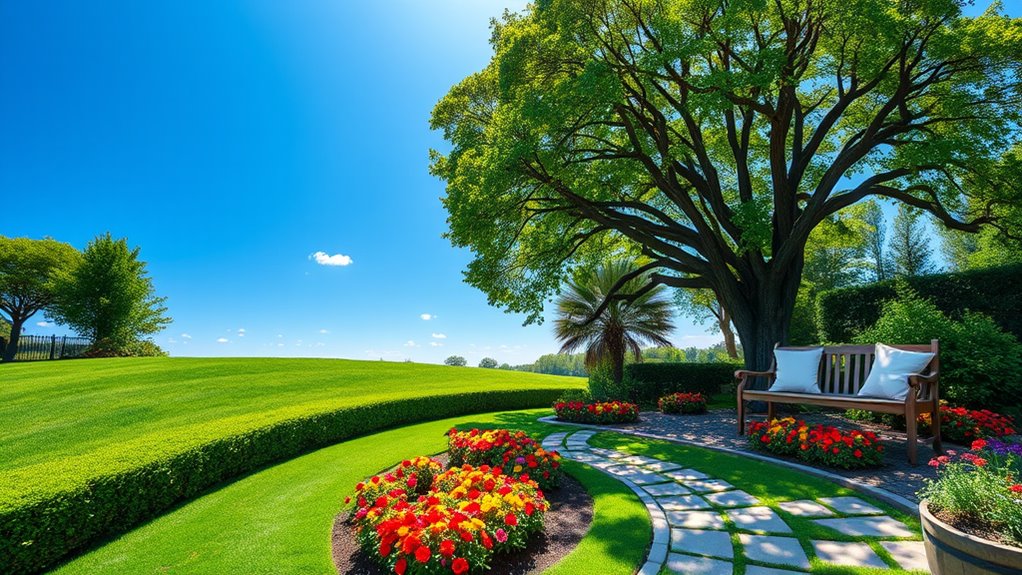
To improve your outdoor space, start by evaluating your area and setting clear goals for its use. Choose plants suited for your local climate, and incorporate hardscaping elements to define functional activity zones. Utilize vertical gardening to maximize planting space and boost visual appeal. Don't forget to plan for seasonal changes and embrace sustainable landscaping practices for long-lasting beauty. By following these tips, you can create a personal oasis that reflects your style and needs—there's even more to explore!
Assess Your Space and Set Goals
How do you envision your outdoor space? Start with a thorough space evaluation, examining every nook and cranny. Consider the sunlight, shade, and existing features. Take notes on what you love and what you want to change. This isn't just about aesthetics; it's about creating a functional and inspiring environment that reflects your style.
Next, engage in goal setting. Decide what you want from this space—whether it's a serene retreat, a lively entertainment area, or a sustainable garden. Prioritize your objectives to guarantee your design is intentional and innovative. Think outside the box; maybe incorporate smart technology for irrigation or unique outdoor lighting.
Choose the Right Plants for Your Climate
To create a thriving garden, you need to understand your local climate zones and what plants will flourish there. Selecting native species can improve your environment's resilience and beauty as well as decreasing maintenance. Keep in mind the seasonal growth patterns to guarantee your garden looks lively year-round.
Understand Local Climate Zones
Grasping your local climate zone is crucial for selecting the right plants for your outdoor space. A thorough climate analysis helps you understand the unique weather patterns in your area, ensuring your terrain flourishes. Here are three key steps to help you determine the best plants:
- Research Climate Zones: Familiarize yourself with USDA hardiness zones and microclimates.
- Analyze Weather Patterns: Observe rainfall, temperature ranges, and seasonal changes to identify plants that thrive in your specific conditions.
- Consider Drought Tolerance: Look for innovative, drought-resistant varieties that can withstand dry spells without compromising beauty.
Select Native Plant Species
Even though you might be tempted to choose exotic plants for your garden, selecting native species is often the best choice for ensuring a thriving outdoor space. Native plants are not merely adapted to your local climate, but they likewise require less water, making them ideal for drought resistance. By incorporating these plants, you can create stunning pollinator gardens that attract bees, butterflies, and other beneficial wildlife, enhancing biodiversity in your surroundings. Plus, native species typically need less maintenance, allowing you more time to enjoy your outdoor oasis. When you embrace the beauty of your region's flora, you're not just beautifying your home; you're also supporting the local ecosystem and nurturing a sustainable environment. Let nature inspire your garden design!
Consider Seasonal Growth Patterns
Grasping seasonal growth patterns is essential when choosing the right plants for your climate. Comprehending how plant growth cycles fluctuate throughout the year allows you to create a thriving environment. Here are three innovative tips to improve your garden:
- Select plants that flourish in your region's growing season to maximize their potential.
- Implement seasonal pruning to encourage healthy growth and enhance aesthetics, ensuring your plants thrive at their peak.
- Group plants with similar water and sunlight needs to create a harmonious ecosystem that reduces maintenance.
Incorporate Hardscaping Elements
Incorporating hardscaping elements can transform your outdoor space into a functional and visually appealing area. By choosing durable materials, you can guarantee longevity during the definition of different zones for activities like dining or relaxing. This thoughtful approach not just improves the beauty of your surroundings but additionally makes it more usable.
Choose Durable Materials
When planning your outdoor space, choosing durable materials is essential for creating lasting beauty and functionality. By focusing on innovative material selection, you can improve both aesthetics and resilience. Here are three key elements to take into account:
- Natural Stone: Offers timeless appeal and withstands weathering, making it perfect for patios and pathways.
- Composite Decking: Combines the beauty of wood with the durability of synthetic materials, reducing maintenance as you provide a modern look.
- Permeable Pavers: Promote water drainage and help prevent erosion, all during adding a stylish touch to your environment.
Define Functional Spaces
To create a truly functional outdoor space, it's important to define specific areas that cater to your lifestyle and needs. Start by envisioning your outdoor rooms, whether it's a cozy dining area, a tranquil reading nook, or a lively entertainment zone. Incorporating hardscaping elements like pavers, retaining walls, or decorative stones helps establish clear boundaries and improves functional design. These features not merely guide movement but additionally provide durability and structure. Think about how you'll use each space—perhaps integrating a fire pit for gatherings or a pathway leading to your garden. By thoughtfully delineating these zones, you'll transform your yard into an innovative and purposeful environment that reflects your unique lifestyle.
Enhance Visual Appeal
Even though hardscaping elements may seem purely functional, they can greatly improve the visual appeal of your outdoor space. By thoughtfully integrating these features, you'll create a stunning environment that captivates the eye. Here are three innovative ideas to reflect on:
- Patios and Pathways: Use unique materials for texture layering, such as natural stone combined with sleek pavers.
- Retaining Walls: Incorporate color combinations that harmonize with your home, adding depth and structure to your garden.
- Fire Pits: Create a focal point that encourages social interaction, enhancing the ambiance of your outdoor area.
Create Defined Areas for Different Activities
Creating defined areas for different activities can transform your outdoor space into a functional oasis. By establishing distinct outdoor zones, you'll create an activity layout that improves usability and enjoyment. Envision a cozy lounge area for relaxation, a lively space for gardening, and a dynamic zone for entertaining guests.
Here's a simple layout to inspire your design:
| Activity Area | Description |
|---|---|
| Lounge Zone | Comfortable seating with shade |
| Garden Zone | Colorful plants and herbs |
| Dining Area | Table and chairs for al fresco meals |
| Play Area | Safe space for children and games |
With defined areas, you'll optimize your outdoor experience, making it easier to switch between activities. Embrace innovation and let each zone reflect your style and purpose, ultimately improving both function and beauty in your outdoor sanctuary.
Utilize Vertical Gardening Techniques
If you've got limited space but still want to enjoy a lively garden, vertical gardening techniques can be a game-changer. By utilizing vertical planters and creating living walls, you can transform even the tiniest outdoor areas into dynamic green retreats.
Here are three innovative ways to incorporate vertical gardening into your space:
- Vertical Planters: Use stacked or wall-mounted planters to maximize your planting area. These can hold herbs, flowers, or even small vegetables, providing easy access and a stunning visual appeal.
- Living Walls: Install a modular system that allows you to grow plants vertically on your wall. This not just beautifies your space but can enhance air quality.
- Trellises and Arbors: Encourage climbing plants like peas or vines to grow upward, providing shade and visual interest as well as saving ground space.
With these techniques, you'll boost your garden game and make the most of your outdoor space.
Add Lighting for Ambiance and Safety
When you want to improve the atmosphere of your outdoor space during the assurance of safety, adding lighting is vital. Consider integrating solar lighting solutions that not only improve the aesthetic but additionally provide energy efficiency. Pathway illumination is fundamental for guiding guests safely through your environment, especially at night.
| Lighting Type | Benefits | Ideal Placement |
|---|---|---|
| Solar Lighting | Eco-friendly, low maintenance | Along pathways and gardens |
| String Lights | Warm ambiance | Around seating areas |
| Spotlights | Highlight features | On trees or sculptures |
| Lanterns | Charming flair | Near patios or entrances |
| LED Bollards | Modern safety | Along walkways |
Incorporate Water Features for Serenity
Adding water features to your outdoor space improves both its tranquility and visual appeal. The gentle sound of flowing water can transform any area into a serene oasis. Here are three innovative ideas to contemplate:
- Fountain Designs: Choose modern or classic styles to match your surroundings. A wall-mounted fountain can save space whilst adding charm and elegance.
- Pond Landscaping: Create a natural pond with aquatic plants and fish. This not only improves biodiversity but additionally provides a calming focal point.
- Waterfalls: Incorporate a small waterfall that cascades into your pond or a stone basin. The mesmerizing movement and sound of water will invite relaxation.
Use Color and Texture to Create Interest
Color and texture are fundamental elements that can breathe life into your outdoor space. By utilizing color psychology, you can evoke emotions and set the mood in your garden. For instance, lively reds and yellows energize, whereas calming blues and greens promote relaxation. Combine these hues thoughtfully to create a dynamic palette that captivates the eye.
Textural contrast is equally important. Mix smooth, glossy surfaces of ornamental grasses with the rough bark of trees or the rugged stones of pathways. This interplay not only adds depth but encourages exploration, drawing guests into your space. Consider incorporating varied materials such as metal sculptures, wooden seating, and soft textiles to improve the sensory experience.
Plan for Seasonal Changes
When planning your outdoor space, it's crucial to choose seasonal plants wisely to guarantee year-round beauty. Implementing seasonal color schemes can improve your scenery's appeal, making it lively in every season. Don't forget to adapt your maintenance routines regularly to keep everything thriving.
Choose Seasonal Plants Wisely
Choosing seasonal plants wisely can transform your outdoor space throughout the year. By embracing seasonal planting and thoughtful plant rotation, you'll keep your scenery lively and engaging. Here are three tips to improve your garden's appeal:
- Select Diverse Plants: Choose a mix of perennials and annuals that bloom at different times, ensuring continuous color and interest.
- Consider Local Climate: Opt for plants that thrive in your specific climate zone, maximizing growth and minimizing maintenance.
- Plan for Texture and Foliage: Incorporate plants with varying leaf shapes and colors to create visual richness, even when blooms fade.
Implement Seasonal Color Schemes
To create a lively outdoor space, implementing seasonal color schemes can make all the difference. By thoughtfully planning your landscaping, you can enjoy a dynamic display of colorful blooms throughout the year. Start by selecting plants that align with each season, ensuring that your garden maintains visual interest no matter the time. For spring, think bright tulips and daffodils; summer can burst with zinnias and sunflowers; autumn might showcase golden marigolds and crimson chrysanthemums; and winter can offer evergreens with subtle accents of winter-hardy pansies. Combine these plants into seasonal arrangements that captivate the eye and create a welcoming atmosphere. This approach not only improves your outdoor space but likewise allows you to express your creativity year-round.
Adapt Maintenance Routines Regularly
Maintaining a lively outdoor space goes beyond selecting the right plants; it also involves adapting your maintenance routines to the changing seasons. To keep your surroundings thriving, follow these crucial steps:
- Conduct Regular Inspections: Check for pests, diseases, and weather damage to guarantee your plants stay healthy and colorful.
- Make Seasonal Adjustments: Change your watering and fertilization schedules as temperatures fluctuate, making sure your plants receive ideal care.
- Prepare for Seasonal Shift: Prune and mulch in preparation for winter or summer, helping your environment withstand temperature extremes.
Consider Sustainable Landscaping Practices
During enhancing your outdoor space, considering sustainable landscaping practices can greatly benefit both the environment and your garden's health. By integrating permaculture principles, you can create a self-sustaining ecosystem that thrives with minimal intervention. Start by observing your space and utilizing natural resources like sunlight and rainwater to your advantage.
Choose eco-friendly materials for hardscaping and planting, such as recycled stone or native plants that require less water and maintenance. These choices not merely reduce your carbon footprint but likewise promote biodiversity in your garden.
Incorporating composting into your routine can enrich your soil and reduce waste, making your garden healthier and more productive. Furthermore, consider using organic pest control methods to protect your plants without harming beneficial insects. Embracing these practices will not solely innovate your setting but will contribute to a healthier planet for everyone.
Maintain a Balance Between Lawn and Garden
Even though balancing your lawn and garden might seem challenging, achieving harmony between the two can improve your outdoor space's beauty and functionality. A well-thought-out lawn care routine paired with innovative garden design can create a seamless shift between grassy areas and floral displays.
Here are three tips to maintain that balance:
- Define Boundaries: Use edging materials like stone or wood to separate your lawn from garden beds, creating a clear distinction that improves visual appeal.
- Choose Complementary Plants: Select plants that harmonize with your lawn's color and texture, guaranteeing that both elements elevate each other rather than compete.
- Regular Maintenance: Schedule routine lawn care and garden upkeep to keep both spaces thriving; this prevents overgrowth and guarantees your outdoor area remains inviting.
Personalize Your Space With Unique Decor
To truly make your outdoor space feel like your own, incorporating unique decor can transform it from generic to personal. Think about adding garden art or outdoor sculptures that reflect your style. Personalized signage can improve your whimsical garden, guiding guests through your curated collections.
| Type of Decor | Idea |
|---|---|
| Unique Planters | Use repurposed items for planters |
| Themed Decor | Create a seasonal theme |
| Decorative Stones | Paint stones with quotes or designs |
| Garden Art | Install a mural or wall art |
These elements not just beautify your space but also tell a story. Choose pieces that resonate with you, whether it's through color, shape, or function. By curating a personal atmosphere, your outdoor area will become a true extension of your personality and creativity, making it a joy to spend time in.
Frequently Asked Questions
How Do I Choose a Landscaping Style That Fits My Home?
Choosing a landscaping style that fits your home starts with considering your home's architecture. You'll want to create architectural harmony by selecting landscaping themes that complement your structure's design. Think about modern, rustic, or tropical styles, and how they can innovate your outdoor space. Look for unique elements like bold plants or creative hardscaping that reflect your personality as you enhance your home's overall aesthetic. Don't be afraid to mix and match for a fresh approach!
What Tools Do I Need for Basic Landscaping Maintenance?
You might think you don't need much for landscaping maintenance, but the right tools can transform your outdoor space. Start with crucial landscaping tools like a sturdy rake, pruners, and a reliable lawnmower. These maintenance necessities keep your garden thriving and looking fresh. Don't underestimate the strength of a good shovel and hoe for digging and planting. Investing in quality tools will not just make tasks easier but will likewise inspire creativity in your gardening efforts.
How Often Should I Water My Plants?
To determine your watering frequency, check the soil moisture regularly. Typically, you should water your plants when the top inch of soil feels dry. Nevertheless, factors like plant type, season, and weather play an essential role. For innovative watering, consider using moisture sensors or drip irrigation systems to optimize efficiency. By monitoring soil moisture levels, you'll guarantee your plants thrive as you conserve water, creating a sustainable and lively outdoor space.
What Are the Best Times of Year for Landscaping Projects?
The best times for gardening projects are during spring and fall. In spring, you can tackle planting, as the soil warms up, encouraging growth and colorful blooms. By focusing on spring planting, you set the stage for a lush setting. In fall, prepare your garden for winter as you plant perennials that'll thrive next season. Timing your projects this way guarantees innovation in your outdoor space, creating a dynamic environment year-round.
How Can I Prevent Pests and Diseases in My Garden?
So, you think your garden's a five-star resort for pests? Think again! To keep those unwelcome guests at bay, focus on pest control and disease prevention. Start by encouraging beneficial insects and using organic solutions. Rotate your crops and practice companion planting to confuse those pesky pests. Regularly inspect your plants and maintain healthy soil. With a little innovation and care, you'll turn your garden into a fortress against unwanted invaders!