



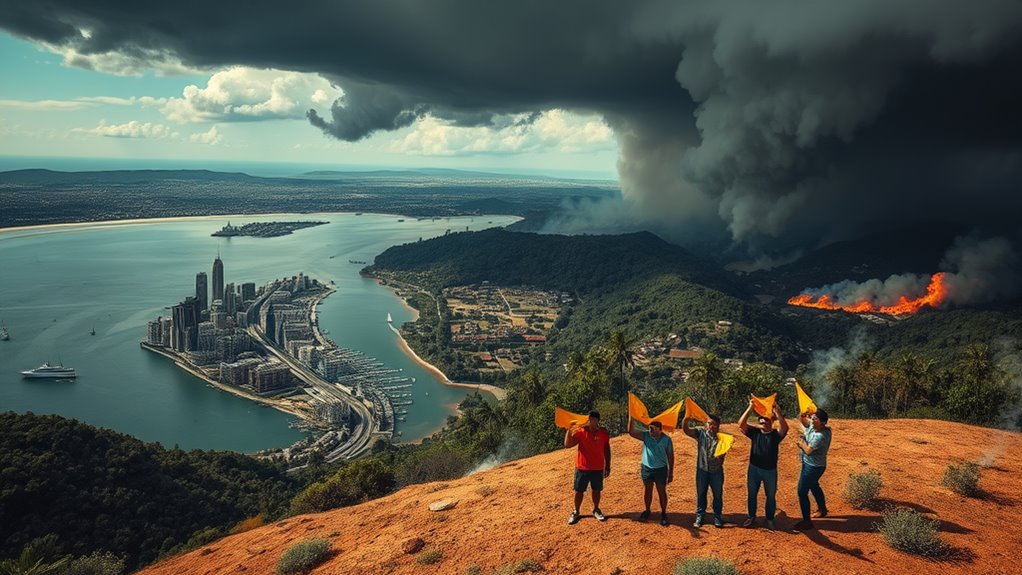
Climate change reporting varies widely around the globe, shaped by regional perspectives and local issues. Coastal areas prioritize urgent adaptation strategies, whereas resource-rich regions focus on economic impacts. Media plays a crucial role in framing public perception, though bias and sensationalism can hinder accurate information dissemination. Grassroots activism utilizes social media to mobilize communities. Journalists face challenges in data access and effective communication. Comprehending these factors reveals a complex environment of climate discourse worldwide that is worth exploring further.
Regional Perspectives on Climate Change Reporting
Regional perspectives on climate change reporting vary greatly, reflecting diverse environmental, economic, and social contexts. These regional disparities often shape how communities perceive and react to climate-related issues. For instance, in coastal areas, where rising sea levels pose an immediate threat, reporting tends to focus on urgent adaptation strategies and resilience. Conversely, regions with abundant natural resources may emphasize the economic impacts of climate policies, often framing their narratives around job preservation.
Cultural narratives greatly influence these perspectives, as local traditions and values affect how information is conveyed and received. In some cultures, climate change may be seen through a lens of stewardship and responsibility, whereas in others, it might be approached with skepticism or denial. Overall, comprehending these regional perspectives is vital for effective communication and policy-making, ensuring that responses to climate change are not only informed but also culturally sensitive and pertinent to local communities.
The Role of Media in Shaping Public Perception
As various factors influence public perception of climate change, the media plays a pivotal role in shaping narratives and disseminating information. Through various platforms, media outlets have the influence to highlight specific issues, frame discussions, and steer public engagement. Nevertheless, the presence of media bias can skew the portrayal of climate-related topics, leading to misinformation or a lack of urgency in addressing the crisis. For instance, sensationalism may prioritize dramatic events over scientific data, potentially diminishing the perceived severity of climate change. Conversely, responsible journalism can cultivate awareness and motivate audiences to engage with the topic meaningfully. The way climate change is reported—whether through emphasizing scientific consensus or showcasing personal stories—directly impacts how the public perceives the issue, in the end influencing community actions and policy discussions. Consequently, the media's role is not merely informative but instrumental in shaping collective insight and response to the climate crisis.
Grassroots Activism and Social Media Influence
Grassroots activism has emerged as a powerful force in addressing climate change, particularly through the lens of social media. Activists utilize digital platforms to mobilize communities, share information, and promote collective action. This shift has enabled social movements to gain traction, as individuals can easily connect and collaborate across geographical barriers.
Through hashtags, viral campaigns, and live broadcasts, activists raise awareness about climate issues, hold corporations accountable, and pressure governments to enact change. Social media serves not just as a tool for communication but also as a space for education, where users can learn about environmental impacts and sustainable practices.
The ability to quickly disseminate information allows grassroots organizations to engage a broader audience and inspire action. As a result, the influence of social media in grassroots activism is reshaping the climate discourse, making it more inclusive and accessible to all. This dynamic interplay is vital in the ongoing fight against climate change.
Challenges Faced by Journalists Covering Climate Issues
What obstacles do journalists encounter when reporting on climate issues? Journalists face considerable challenges, primarily related to data access and audience engagement. Reliable data can be scarce, as many regions lack thorough climate monitoring systems. This limitation hinders journalists' ability to provide accurate and timely information. Moreover, the complex scientific nature of climate change makes it difficult to present findings in an accessible manner for a general audience. Journalists must distill intricate research into understandable narratives without losing vital details, a task that often requires expertise beyond their training. In addition, engaging the audience presents its own difficulties; many people feel overwhelmed or apathetic about climate issues, making it harder for journalists to capture interest. This combination of limited data and the challenge of effective communication can greatly impede the ability of journalists to inform the public about critical climate-related developments.
The Impact of Policy Changes on Climate Reporting
How do policy changes shape the terrain of climate reporting? Policy implications play an essential role in defining the frameworks within which climate issues are reported. When governments adopt new environmental regulations or commitments, these changes influence the focus and depth of media coverage. For instance, stringent reporting standards may emerge, compelling journalists to address specific metrics related to carbon emissions or renewable energy initiatives.
Conversely, lax policies may lead to a decrease in accountability, resulting in less rigorous reporting on climate impacts. Additionally, international agreements can encourage collaborative reporting efforts among nations, promoting a unified approach to climate journalism. As policies evolve, so too does the responsibility of journalists to adapt their methods and narratives, ensuring that the public remains informed about the urgency and complexity of climate change. Therefore, the interplay between policy and reporting is essential in shaping public awareness and engagement with climate issues.
Frequently Asked Questions
How Do Different Countries Prioritize Climate Change in Their Media Coverage?
Different countries exhibit varied priorities in their media coverage of climate change, influenced by cultural perspectives and societal values. In some regions, media narratives emphasize immediate threats and urgent action, reflecting a heightened sense of vulnerability. Conversely, other nations may frame climate issues within economic or political contexts, leading to less urgency in reporting. Such differences reveal how local cultures shape the portrayal and perceived importance of climate change in public discourse.
What Are Common Misconceptions About Climate Change Reporting?
Common misconceptions about climate change reporting often stem from misleading narratives and sensationalist headlines. Many individuals believe that media coverage consistently presents an accurate scientific consensus, overlooking the instances where exaggerated claims overshadow nuanced discussions. Some assume all outlets prioritize climate urgency equally, ignoring the variations in coverage. Furthermore, the framing of climate stories can lead to confusion about the severity and immediacy of the issue, affecting public perception and response to climate challenges.
How Can Individuals Support Accurate Climate Change Journalism?
Individuals can support accurate climate change journalism by actively participating in fact-checking initiatives and nurturing community engagement. By verifying information before sharing it, they can combat misinformation and promote reliable sources. Furthermore, engaging with local journalism through discussions, events, or social media can strengthen connections between reporters and the community, ensuring that diverse perspectives are represented. This collaborative approach improves the quality of climate discourse, eventually leading to a more informed public.
Are There Specific Media Outlets Known for Effective Climate Reporting?
The question of specific media outlets recognized for effective climate journalism highlights the significance of trusted sources in disseminating essential information. Outlets such as The Guardian and National Geographic have gained acclaim for their thorough coverage. Moreover, media partnerships with organizations focused on environmental issues improve the quality of reporting. These collaborations help confirm that climate-related news is accurate, engaging, and accessible, promoting a better comprehension of the ongoing climate crisis among the public.
What Role Do International Organizations Play in Climate Change Reporting?
International organizations play a pivotal role in climate change reporting, with over 190 nations collaborating under the United Nations Framework Convention on Climate Change. This global cooperation facilitates data transparency, allowing for consistent and reliable information dissemination. By standardizing reporting practices, these organizations help identify climate trends and impacts, guiding policy decisions. Their efforts guarantee that nations remain accountable, promoting a collective response to the pressing challenges posed by climate change.