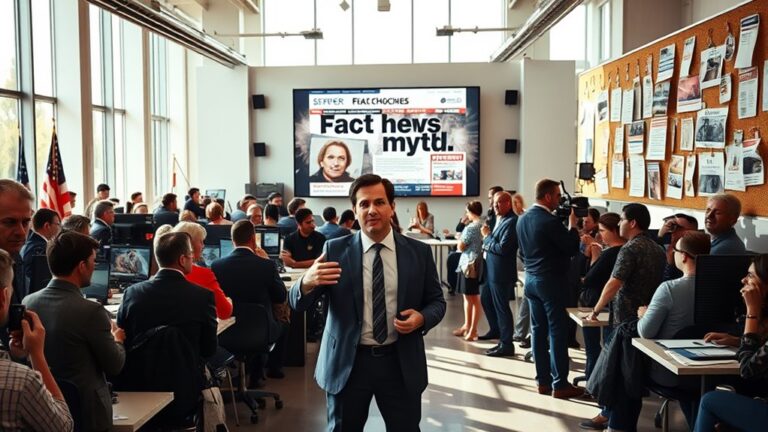




News coverage considerably impacts elections and public policy. Media framing shapes how voters perceive issues and candidates, influencing their decision-making. Coverage bias can skew public comprehension and prioritize certain narratives, exacerbating polarization. Meanwhile, sensationalism often distorts the representation of critical issues, leading to a misinformed electorate. Social media further compounds these effects by reinforcing echo chambers and spreading misinformation. Exploring these dynamics reveals the intricate relationship between media representation and political outcomes.
The Role of Media in Shaping Public Opinion
The influence of media on public opinion is a powerful force in contemporary society. Media shapes perceptions by framing issues, highlighting certain narratives, and influencing what information is deemed significant. As a result, the public's comprehension of political matters can be markedly swayed. This underscores the significance of media literacy, which equips individuals with the skills to critically evaluate sources and discern fact from misinformation. In an age where information is abundant yet often misleading, media literacy becomes fundamental for nurturing informed citizens who can engage thoughtfully in civic discourse.
Moreover, public trust in media institutions plays a key role in this dynamic. When citizens trust the information they receive, they are more likely to form opinions based on accurate portrayals of events. Conversely, a lack of trust can lead to skepticism and polarization, eventually undermining democratic processes. Therefore, the interplay between media influence and public perception remains an important area of concern in contemporary politics.
The Impact of Framing on Voter Behavior
Media framing markedly shapes voter behavior by influencing how issues are perceived and prioritized. Framing effects occur when the presentation of information leads voters to interpret issues through specific lenses, altering their attitudes and choices. For instance, highlighting economic success can lead to positive voter perceptions of incumbent politicians, whereas focusing on economic downturns may generate negative sentiments. This manipulation of context can considerably sway public opinion, as voters tend to align their beliefs with the dominant narrative presented by the media. Additionally, framing can create urgency around specific topics, prompting voters to prioritize those issues in their decision-making processes. Ultimately, the way information is framed not just impacts individual voter perceptions but also shapes broader electoral outcomes, illustrating the influential role of media in the democratic process. Comprehending these dynamics is essential for grasping how news coverage affects elections and public policy.
Social Media's Influence on Election Outcomes
As social media platforms have become integral to everyday communication, their influence on election outcomes has grown considerably. Social media algorithms play an essential role in shaping public opinion, curating content that users are most likely to engage with. This often results in echo chambers where individuals are exposed mainly to viewpoints that reinforce their beliefs. Misinformation campaigns have emerged as a significant concern, as false narratives can spread swiftly across these platforms, misleading voters and distorting perceptions of candidates and issues. Such campaigns can manipulate emotions and drive voter behavior, ultimately impacting election results. Additionally, the immediacy of social media allows for real-time reaction and mobilization, which can amplify both positive and negative information about candidates. In this environment, the line between factual reporting and misleading content becomes increasingly blurred, leading to profound implications for democratic processes and public policy development.
Coverage Bias and Its Effect on Policy Debates
Though coverage bias can subtly shape public discourse, it has significant repercussions for policy debates. Coverage imbalance often occurs when certain issues receive disproportionate attention, whereas others are largely overlooked. This selective focus can skew public perception, leading to an incomplete comprehension of policy options and their implications. Partisan reporting further complicates the environment by framing issues through a political lens, reinforcing existing biases among audiences. As a result, policy discussions may become polarized, with opposing viewpoints often misrepresented or overshadowed. This atmosphere stifles constructive dialogue, eventually affecting the decision-making processes of policymakers. When the media emphasizes particular narratives or viewpoints, it can marginalize alternative perspectives that might be vital for informed debate. In this way, coverage bias not just shapes public opinion but also influences the trajectory of public policy, highlighting the need for balanced and equitable news reporting in democratic societies.
The Consequences of Sensationalism in News Reporting
Sensationalism in news reporting often exacerbates the challenges posed by coverage bias, further distorting public awareness of political and social issues. Clickbait headlines and emotional manipulation dominate many news outlets, leading audiences to prioritize sensational stories over substantive coverage. This shift in focus can result in a misinformed electorate, ultimately influencing democratic processes and policy decisions.
| Aspect | Impact |
|---|---|
| Public Perception | Skewed awareness of issues |
| Political Discourse | Polarization and hostility |
| Voter Engagement | Increased apathy or outrage |
| Policy Formation | Reactive rather than proactive |
Frequently Asked Questions
How Do Journalists Decide What Stories to Cover?
Journalists make editorial choices based on various factors influencing story selection. They consider the relevance of a topic, audience interest, and the potential impact of the story. Furthermore, ethical guidelines and journalistic integrity play vital roles in determining which stories are prioritized. Timeliness and availability of information likewise influence decisions, as journalists aim to provide accurate and engaging content that resonates with the public, ensuring a diverse representation of issues and events.
What Role Do Fact-Checkers Play in Elections?
Fact-checkers play an essential role in elections by ensuring the accuracy of information disseminated to the public. For instance, during a highly contested election, a fact-checking organization might verify claims made by candidates in their debates. This fact-checking significance becomes evident as it aids in misinformation mitigation, allowing voters to make informed decisions based on verified facts rather than false narratives. Their work encourages transparency and accountability in the electoral process.
How Can Voters Discern Credible News Sources?
Voters can discern credible news sources through source evaluation and bias recognition. To evaluate a source, individuals should consider the author's credentials, the publication's reputation, and the presence of citations or references. Furthermore, recognizing bias involves analyzing the language used, the framing of stories, and the diversity of viewpoints presented. By employing these strategies, voters can navigate the complex media environment and make informed decisions based on reliable information.
What Legal Regulations Govern Political Advertising?
In a world where unicorns might endorse political candidates, one would hope for some rules governing the chaos of political advertising. Fortunately, advertising regulations exist to guarantee transparency and fairness in campaigns. These laws often focus on campaign finance, requiring disclosure of funding sources and spending limits. Such regulations aim to level the playing field, preventing wealthy donors from overshadowing the voices of ordinary citizens in the democratic process.
How Does Media Literacy Impact Voter Engagement?
Media literacy plays an essential role in shaping voter engagement by equipping individuals with the skills to critically analyze information. Through effective media education, voters become an informed electorate, capable of distinguishing between credible news sources and misinformation. This heightened awareness encourages active participation in democratic processes, as individuals are more likely to seek out diverse viewpoints, engage in discussions, and make informed choices at the polls, ultimately reinforcing the overall political environment.